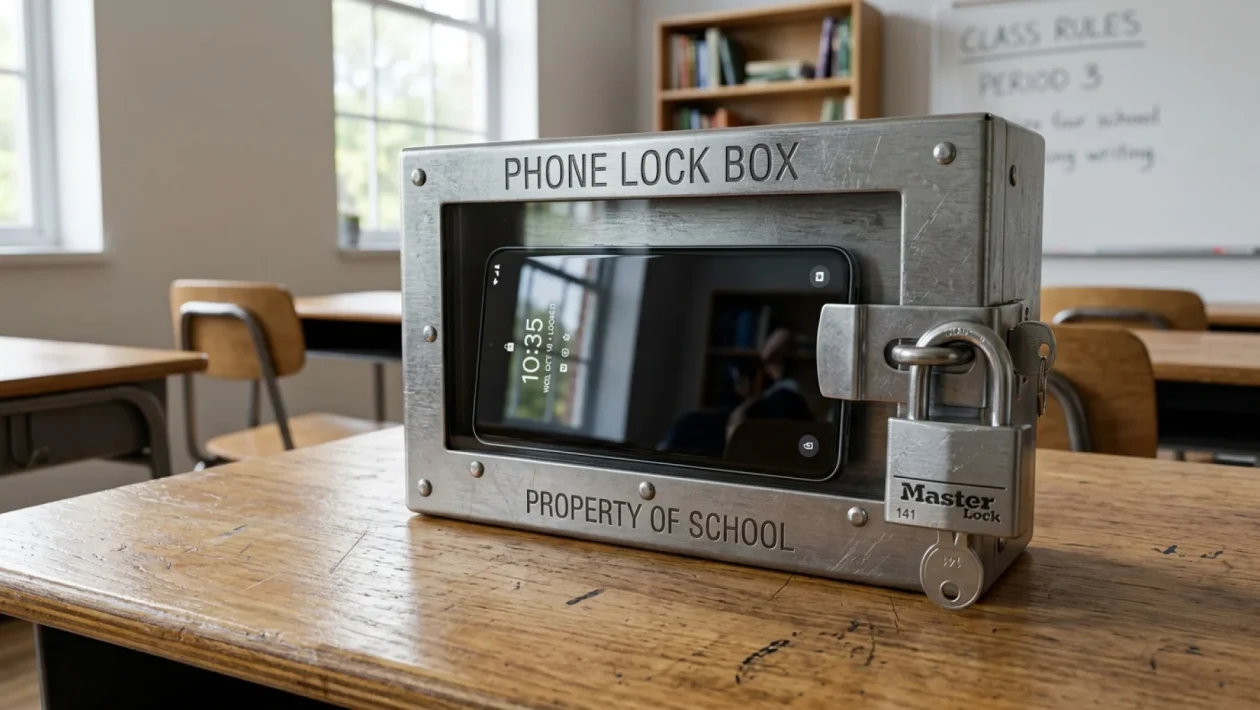
Listen, if you thought getting a teenager to put down their screen was tough, try locking their digital lifeline in a steel box. The pushback is incredibly real, and the volume is deafening right now. Across North America, the battle over high school phone bans has officially escalated from quiet classroom grumbles to highly organized resistance.
We are tracking a massive wave of protests targeting phone lock boxes this July, and everyone from parents to principals is caught in the crossfire. But do not panic just yet—there is a practical middle ground emerging that might just save the upcoming fall semester.
Why Phone Lock Boxes Are Sparking A Nationwide Crisis
Let’s get one thing straight: kids are not just whining about losing TikTok during math class. They are actively organizing. The core issue driving the backlash against phone lock boxes is a deep-seated anxiety about physical safety and personal autonomy.
Students argue that in a world where campus emergencies are a grim reality, severing their primary line of communication is a massive safety hazard. It is a completely fair point when you look at it from their boots-on-the-ground perspective.
However, the numbers tell the administration’s side of the story clearly. In Ontario alone, an astonishing 78% of school boards have implemented some form of physical device restriction as of early 2026. This massive collision between strict administrative policy and modern teenage reality was bound to spark a fire.
The Summer 2026 Student Protests Explained
School might be out for the summer, but the organizing certainly has not stopped. This July, students have been turning local Tim Hortons parking lots into strategic campaign headquarters. They are not just painting cardboard signs; they are executing highly coordinated digital strikes.
They use encrypted group chats on reliable Canadian telecom networks like Telus to plan organized walkouts for the upcoming fall semester. It is honestly impressive to watch these young adults mobilize. If you want to know how these teenagers are beating the system, here is the exact playbook they are using to get their message across:
- Drafting the Manifesto: Student leaders create a clear, shared digital document outlining their specific safety concerns regarding mandatory device confiscation.
- The Social Media Blitz: They launch hyper-localized Instagram and TikTok campaigns using specific school district hashtags to build public momentum.
- Coordinated Pushback: Organizers plan synchronized email campaigns, effectively flooding school board inboxes with parent-backed petitions.
What Schools Are Doing Next To Quell The Chaos
Administrators are not just sitting on their hands while this storm brews. The smart principals are realizing that a heavy-handed approach with brands like Yondr pouches or rigid steel lockers is not a magic silver bullet.
They desperately need a solution that keeps classrooms distraction-free without treating students like inmates.
“We cannot just lock away the problem and throw away the key. The most successful districts in 2026 are the ones inviting student council leaders to the table to negotiate device-free zones rather than enforcing blanket bans.” – Dr. Marcus Hayes, Education Policy Director
So, what does the actual compromise look like on paper? Let’s break down the current scorecard between the strict physical lock box method and the new hybrid approaches gaining serious traction.
| Strict Lock Box Policy | Hybrid Compromise Model |
|---|---|
| Phones physically locked from 8 AM to 3 PM | Phones stored in backpacks, accessible only at lunch |
| High initial cost for hardware and pouches | Zero cost, relies heavily on clear disciplinary consequences |
| Sparks heavy student protests and parent anxiety | Generally accepted and respected by the student body |
Frequently Asked Questions
Are schools legally allowed to lock up student phones?
Yes, in most North American jurisdictions, schools have the clear authority to confiscate or restrict devices to maintain an educational environment. However, the legal waters get incredibly muddy when a student’s expensive personal property is damaged or lost while in the school’s possession.
Will these summer protests actually change school policies?
Absolutely. We are already seeing major districts walk back their strict lock box mandates for the Fall 2026 semester, opting for “silent and away” policies instead. Sustained student pressure, combined with loud parent safety concerns, is proving to be a powerful catalyst for rapid change.
The Final Word
🤝 Share your thoughts with the community below because I want to hear exactly where you stand on this massive digital tug-of-war.
📱 Talk to your kids before the new school year starts so they know exactly what to expect when they walk through those classroom doors.
💡 Stay informed by keeping a close eye on your local school board meetings this August, because that is where the real decisions will be finalized.
👇 Good luck navigating the back-to-school chaos this year, and remember to keep those lines of communication wide open!