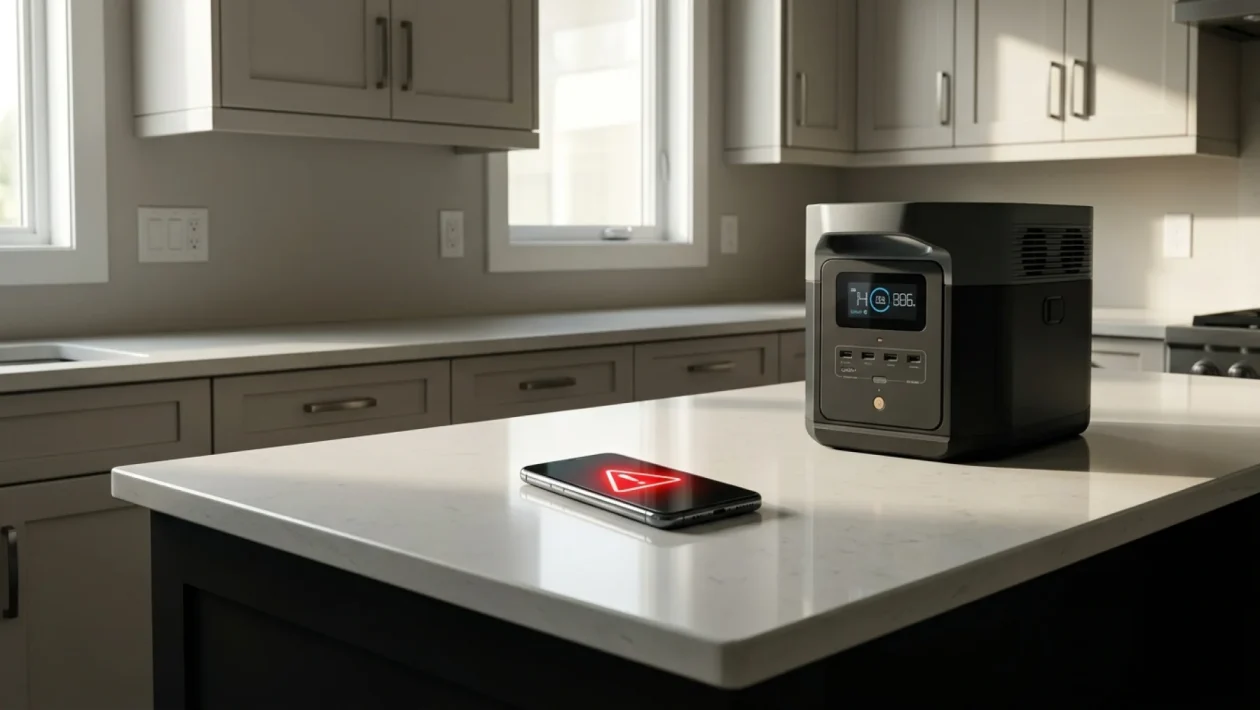
Your phone suddenly shrieks with an ear-piercing tone, but it is not an Amber Alert or a flood warning. It is July 2026, and you are staring at a massive, bold text telling you the power grid is on the brink of total collapse. Energy emergency alerts are becoming the new normal for millions of North Americans, turning our essential electrical infrastructure into a massive bottleneck. But instead of sitting in the dark and waiting for the grid to fry, you can bulletproof your own home against the chaos with a few smart, practical upgrades.
Let’s tear apart the headlines you are seeing every night. We are going to look at why the grid is choking, what these alerts actually mean for your household, and how you can ride out the storm without breaking a sweat.
Energy Emergency Alerts: Decoding Your Smartphone’s Panic Mode
When an energy emergency alert hits your screen, the local utility operator is basically begging for a lifeline. They are watching demand outpace supply in real-time, and they are seconds away from pulling the plug to save the broader system. Understanding these alerts is your first line of defense.
The North American Electric Reliability Corporation (NERC) recently dropped a terrifying statistic: high-risk grid stress events have spiked by 42% over the last three summers alone. We are asking our aging infrastructure to charge electric vehicles, run massive air conditioners, and power data centers, all at the exact same time.
| Alert Level | What It Actually Means For Your Home |
|---|---|
| Conservation Appeal (Flex Alert) | Voluntary. Delay running your dishwasher and bump your thermostat up a few degrees. |
| EEA Level 2 | Reserves are critically low. Utilities are tapping into emergency demand-response programs. |
| EEA Level 3 | Rolling blackouts are imminent. The grid is actively shedding load to prevent a total blackout. |
When you see that Level 3 warning flash across your screen, the time for preparation is officially over. That is the moment your home needs to seamlessly transition into survival mode.
Surviving The Squeeze: Practical Home Backup Solutions
As a guy who spends half his life evaluating home tech and the other half turning wrenches, I can tell you that hoping the government will fix the grid is a terrible backup plan. You need to take control of your own power supply.
You do not necessarily need a massive, whole-home system to keep your family comfortable. If you take a quick trip down the aisles of Canadian Tire or Home Depot, you will find incredibly capable portable power stations from brands like EcoFlow and reliable standby generators from Generac that can keep your fridge running and your fans spinning.
Here is exactly what you should do the moment an energy emergency alert hits your phone:
- Isolate your heavy hitters: Instantly shut off your electric dryer, oven, and pool pump. These are massive energy vampires that strain the grid and drain your personal backups.
- Pre-cool your living space: If the alert is a warning for later in the day, crank your AC down immediately to chill the house, then turn it off completely during the peak demand window.
- Deploy your localized backup: Connect your critical appliances—like the refrigerator and medical devices—directly to your portable power station or fire up your inverter generator outside.
- Create a micro-climate: Close all blinds and gather the family in the lowest, coolest room of the house. Use battery-operated fans to keep the air moving.
The Gridlock Effect: When Peak Demand Hits A Bottleneck
We often think of “gridlock” as a traffic term, but in 2026, it perfectly describes the state of our electrical transmission lines. We actually have a decent amount of power being generated, but we cannot move it to where it is needed fast enough.
Imagine trying to force a firehose volume of water through a garden hose. That is exactly what happens when remote solar and wind farms try to push peak-hour energy into major metropolitan centers. The transmission lines literally heat up, sag, and risk shorting out, creating an invisible, digital traffic jam.
When the grid gets locked up like this, operators have no choice but to initiate rolling blackouts. They are deliberately cutting off your neighborhood to save the entire region from going dark for weeks.
Texas And California News: Why They Dominate The Headlines
If you watch the evening news, you would think Texas and California are the only places on earth with power lines. But there is a very practical reason these two massive economies are constantly making headlines for energy emergencies.
Texas operates on its own isolated grid (ERCOT), meaning when things go sideways, they cannot easily borrow power from neighboring states. California, on the other hand, is battling an aggressive transition to renewables while simultaneously managing historic wildfire risks that force them to deliberately de-energize lines.
“The grids in Texas and California aren’t just aging; they are being fundamentally redesigned in mid-air while we are still relying on them to keep our modern lives running.” – Dr. Aris Tsouknidas, Power Systems Engineer.
What happens in these two states is a crystal ball for the rest of North America. The localized gridlocks they are experiencing now will be arriving in your backyard within the decade if we do not massively upgrade our transmission infrastructure.
Frequently Asked Questions
Why do energy emergency alerts happen more often in the summer?
Summer brings massive, sustained heat domes across the continent. When millions of households and businesses blast their air conditioning simultaneously during the late afternoon, it creates an unprecedented spike in electrical demand that the grid simply cannot support.
Can my smart meter automatically shut off my power during an alert?
If you have opted into a utility “demand response” program, your power company might have the ability to remotely adjust your smart thermostat or briefly cycle your AC compressor. However, they cannot completely shut off your home’s main power supply via the smart meter just to save energy.
Are solar panels enough to protect me during a gridlock blackout?
Not on their own. Standard grid-tied solar panels automatically shut down during a blackout to prevent back-feeding electricity and electrocuting line workers. To keep your lights on during an outage, you must have a paired battery backup system or a specialized hybrid inverter.
Wrapping It Up
🤝 Look, navigating this new era of rolling blackouts and shrieking smartphones doesn’t have to be a stressful ordeal. By treating these energy emergency alerts as a prompt rather than a panic button, you instantly take back control of your home’s comfort and safety.
💡 Do yourself a massive favor this weekend and do a quick audit of your emergency supplies. Check the fuel for your generator, cycle the charge on your battery banks, and have a solid plan for when the lights inevitably flicker and fade.
📱 I’d love to hear how you are prepping your own home for the summer grid crunch. Share your thoughts in the comments below, or pass this guide along to that one neighbor who always borrows your flashlight!
👇 Stay safe, stay powered up, and I will catch you in the next one.