Your job site just got a massive regulatory overhaul, and ignoring it could shut down your business before Friday.
For years, federal heat regulations were vague guidelines that most foremen treated as polite suggestions. As of July 2026, OSHA heat laws are officially on the books across North America, carrying severe mandatory penalties for non-compliance.
If you run a framing crew, a landscaping business, or a roofing company, adapting to these mandates isn’t just about saving your workers from heatstroke. It is about keeping your company out of bankruptcy.
OSHA Heat Laws 2026: The New Reality on the Job Site
We all knew this was coming. The push for a standardized federal regulation has been brewing for over a decade.
Between 2011 and 2022, environmental heat exposure claimed the lives of over 400 North American workers. That grim statistic ultimately forced regulators’ hands to finalize this historic 2026 framework.
Now, cross-border contractors and local crews alike are facing the same strict reality. Whether you are buying high-vis gear at Mark’s in Calgary or outfitting your team with Carhartt in Texas, you need a documented compliance strategy today.
How the New Extreme Temperature Rules Actually Work
The days of relying on the “eyeball test” to see if your guys are overheating are dead and gone.
The 2026 framework introduces two highly specific regulatory triggers: an initial action level and a high-heat hazard level.
Once the heat index hits 80°F (27°C), you are legally required to implement your basic heat illness prevention plan. When it spikes to 90°F (32°C), the high-heat protocols automatically kick in.
“These aren’t suggestions anymore. If an inspector rolls up and you don’t have a written, active heat plan for 90-degree days, they will pull your permit right there on the curb,” warns David Henderson, a senior safety consultant for North American Trades.
Protect Your Crew: Mandatory Rest and Hydration
Under the new mandates, water and shade are no longer treated as job site perks. They are heavily regulated worker rights.
Your guys must be properly acclimatized if they are new to the site or returning from a week-long summer vacation. You can’t just throw a greenhorn onto a sweltering roof and expect them to keep up.
Here is exactly how to bring your site up to code this afternoon:
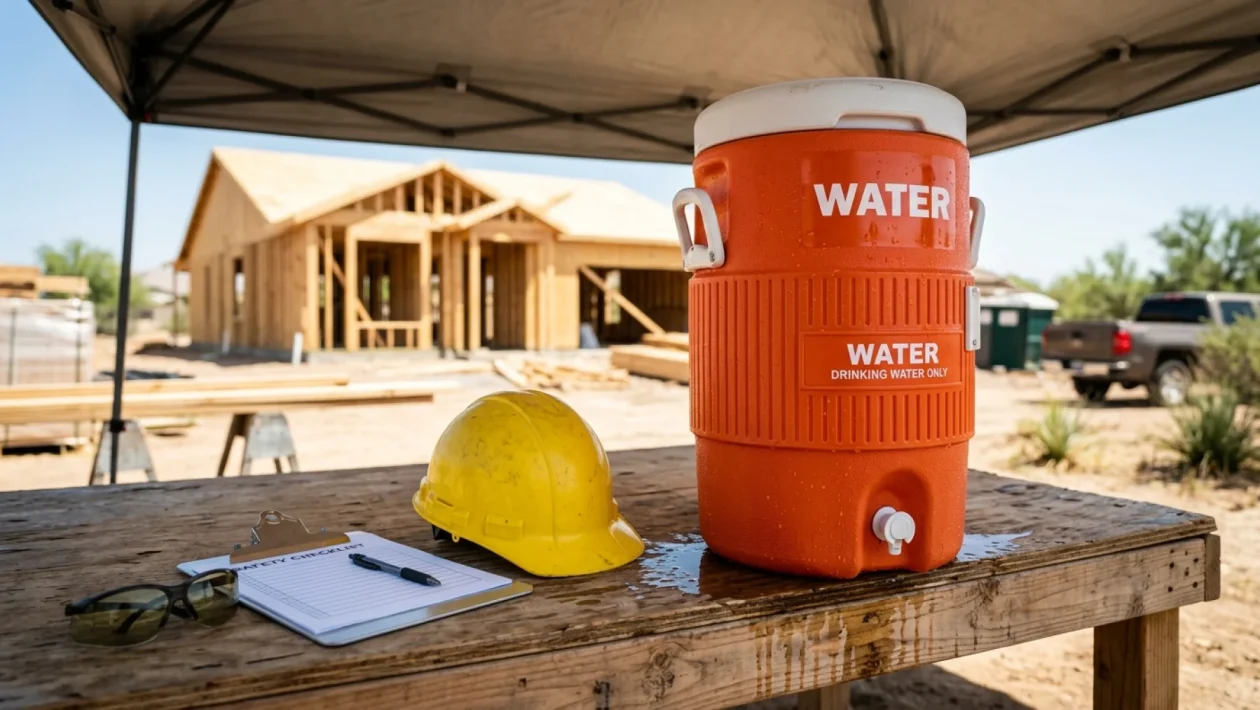
- Provide immediate cool water: You must supply at least one quart of comfortably cool drinking water per hour, per employee.
- Set up mandatory shade: A designated cooling area with artificial or natural shade must be easily accessible at all times.
- Enforce paid rest breaks: When the index hits 90°F, mandate a minimum 10-minute paid rest break every two hours.
- Implement a buddy system: Pair workers up so they can actively monitor each other for early signs of heat exhaustion.
Protect Your Wallet: Avoiding the Brutal New Fines
If you think buying an extra pop-up tent and a few coolers of ice is expensive, wait until you see the new citation structure.
Regulators are not messing around this summer. The fines are explicitly structured to cripple repeat offenders and negligent contractors.
| Violation Type | 2026 Penalty Structure |
|---|---|
| Failure to provide water/shade | Up to $16,000 per violation |
| No written heat safety plan | Up to $16,000 per violation |
| Willful or repeat offenses | Over $160,000 per violation |
Investing a few hundred bucks into high-quality hydration stations and shaded rest areas is literally the cheapest insurance policy you will ever buy.
Frequently Asked Questions
Do these laws apply to indoor workers?
Yes. The 2026 regulations cover indoor environments like warehouses, bakeries, and manufacturing plants where the internal heat index exceeds the 80°F threshold.
Can I just have employees bring their own water?
Absolutely not. The legal burden of providing accessible, cool drinking water falls 100% on the employer under the new standard.
Does Canada have the exact same OSHA rules?
While OSHA is an American agency, provincial regulators like WorkSafeBC and Ontario’s Ministry of Labour have implemented parallel heat stress standards for 2026 that mirror these exact same temperature triggers.
🤝 Good luck out there this summer, because the rules of the job site have officially changed.
💡 Stay ahead of the curve by downloading a free heat illness prevention template today and customizing it for your specific crew.
📱 Share your thoughts in the comments below—how is your team handling the strict new 2026 heat regulations?
👇 Click the link on our homepage to gear up with our top-rated cooling vests and approved hydration packs.