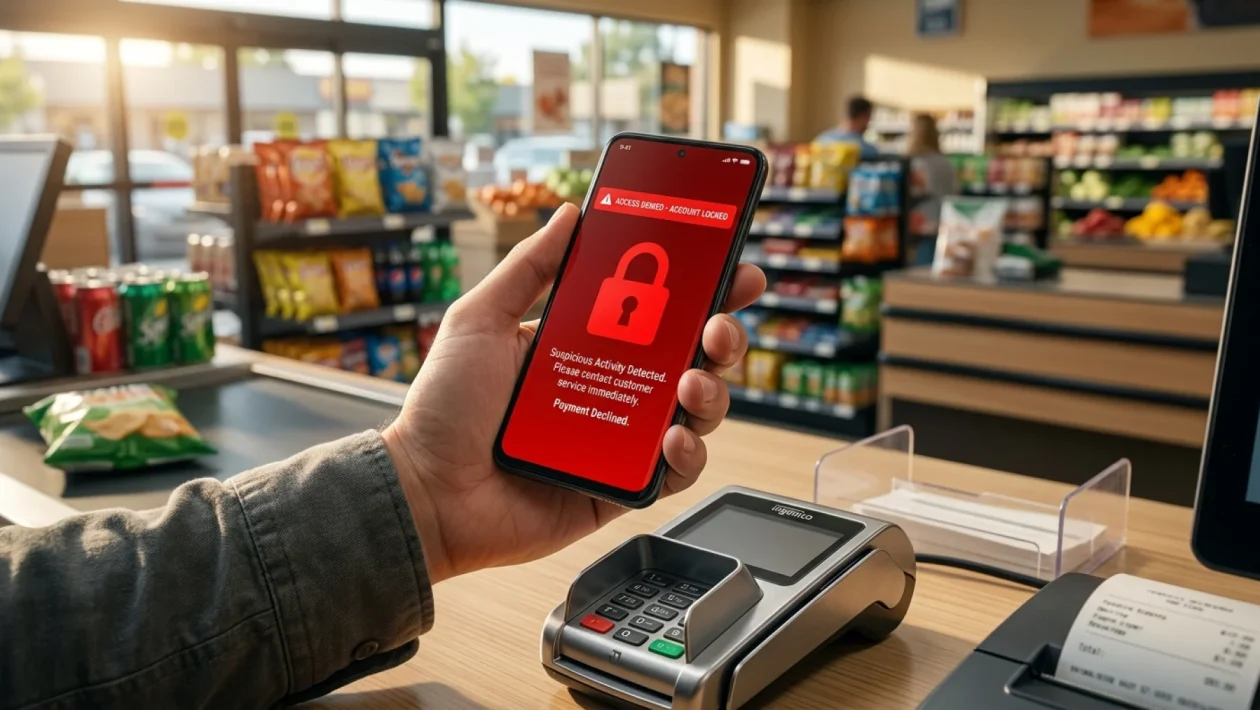
You swipe your card for a simple tank of gas on the way to the cottage, and the machine screams declined. You pull up your banking app, only to find a glaring red banner stating your funds are completely frozen.
Welcome to July 2026, where a massive digital overhaul in automated financial security is treating everyday consumers like international money launderers. Flagged bank accounts are skyrocketing this month, leaving millions of innocent folks entirely locked out of their own cash.
If you haven’t been hit yet, consider yourself lucky. Dodging this sweeping digital dragnet requires knowing exactly what these new bank bots are hunting for, and how to outsmart them before your next grocery run.
The July Surge: Why The Algorithms Are Suddenly So Aggressive
You aren’t imagining things; the banking system has become incredibly paranoid virtually overnight. On July 1st, major new financial intelligence regulations quietly took effect across North America to combat a record wave of sophisticated digital fraud.
To keep up with the government mandates, major institutions like TD Canada Trust and sprawling regional credit unions handed the reins over to hyper-aggressive AI monitoring systems. These unfeeling bots do not care about your weekend plans.
In fact, recent industry cybersecurity data reveals that a staggering 1 in 6 North Americans have experienced a false-positive account freeze in just the last twelve months. The algorithms are now programmed to act first and ask questions later.
“Banks have dialed their risk tolerance down to absolute zero this summer. The AI is designed to freeze the account at the slightest anomaly, placing the burden entirely on the consumer to prove they aren’t a criminal.” – Marcus Thorne, Financial Cybersecurity Analyst
The Exact Triggers Locking Up Your Hard-Earned Cash
So, what exactly is tripping the wire? The security bots are looking for deviations from your normal routine, and summer is the ultimate time for routine-breaking.
Maybe you bought a used boat on a digital marketplace, or perhaps you’re just paying for overpriced hot dogs at a cross-border baseball game. To a poorly tuned AI, your perfectly normal summer activities look exactly like a stolen identity.
Here is a quick look at what is currently setting off the loudest alarms in the banking sector this month:
| Transaction Type | AI Threat Level |
|---|---|
| Out-of-country ATM withdrawals | High Risk |
| Multiple large Interac e-Transfers | Severe Risk |
| Sudden cryptocurrency purchases | Automatic Freeze |
| Unusual late-night online shopping | Moderate Risk |
How To Bulletproof Your Account Before The Bots Strike
Nobody wants to spend three hours on hold with a customer service agent while their groceries melt in a hot trunk. You need to be proactive right now.
Taking a few minutes today can save you a massive headache later this week. Here is exactly how you keep your money accessible and the algorithms happy:
- Set digital travel notices: Do not just assume your bank knows you are on vacation. Use your mobile banking app to log your travel dates and destinations explicitly.
- Warm up large purchases: If you are about to drop a massive chunk of cash on a home renovation or a used vehicle, call your branch first to pre-authorize the exact amount.
- Diversify your wallet: Never travel with just one card tied to a single institution. Keep a backup credit card from a completely different bank ready to go.
- Update your contact info: If a freeze happens, the bank sends an automated text. If they have your old phone number from 2023, you will never get the crucial alert to unlock it.
Frequently Asked Questions
How long does a security freeze usually last?
If you catch the automated text message immediately, you can often unlock your account in seconds by replying “YES” to confirm the purchase. If you miss that brief window, it requires a phone call that could take 24 to 48 hours to fully resolve.
Will a flagged account hurt my credit score?
No, not at all. A security freeze is an internal protective measure by your specific financial institution. It does not get reported to credit bureaus and has absolutely zero impact on your overall credit rating.
Can the bank legally hold my money like this?
Yes, they absolutely can. When you originally opened the account, you signed a lengthy terms of service agreement that gives the institution the legal right to restrict access if they suspect any fraudulent activity.
🤝 Good luck navigating the financial minefield this summer, and remember that an ounce of prevention is worth a pound of cure when it comes to your hard-earned cash.
💡 Take five minutes tonight to update your banking app settings, log your upcoming road trips, and make sure your phone number is perfectly correct in their system.
📱 If you have been caught in this sweeping AI dragnet recently, you definitely aren’t alone.
👇 Hit the comments below and share your thoughts or your most frustrating frozen-account story from this month!