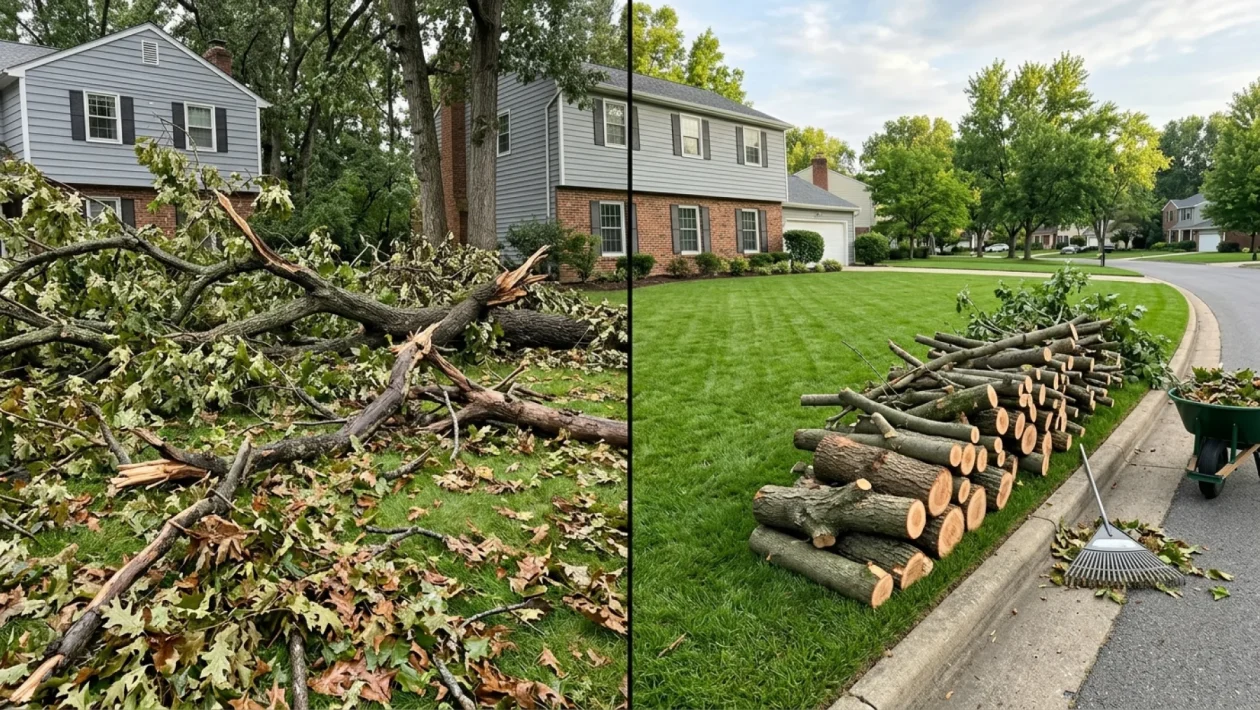
You step onto your porch, coffee in hand, only to find your property looking like a commercial logging site. Massive branches are down, leaves are scattered, and your meticulously manicured lawn is buried under heavy timber. You need a fast, reliable action plan to haul this mess away before it ruins your entire week.
Luckily, municipal storm debris cleanup operations are officially in high gear. Local crews are aggressively expanding curbside pickups and adding special yard waste drop-off access to bail homeowners out of this exact nightmare.
Storm Debris Cleanup: Tackling The Wreckage Head-On
Here is a wild, back-breaking fact for you: a single mature oak tree can drop over 1,500 pounds of deadwood during a severe, high-velocity wind event. That is a staggering amount of weight to haul to the curb by yourself.
Before you get completely overwhelmed, it is time to assess the battlefield. Grab your trusty Stihl chainsaw, pull on those heavy-duty leather work gloves you picked up at Canadian Tire, and start breaking the problem down into manageable pieces.
The goal is to move the wreckage from your grass to the collection zone with maximum efficiency.
Fast Curbside Rules: What You Can (And Can’t) Leave Out
Municipalities like Chatham-Kent are actively deploying trucks for special brush collection in hard-hit zones like Blenheim, Erieau, and Shrewsbury. However, the crews will drive right past your driveway if you fail to follow their strict guidelines.
To guarantee your pile gets picked up, you need to understand exactly what the city machinery can handle.
| Curbside Do’s | Curbside Don’ts |
|---|---|
| Keep tree limbs and brush under 8 inches (20 cm) in diameter. | Do not block public sidewalks or street roadways. |
| Stack branches neatly with cut ends facing the street. | Never obscure fire hydrants or storm catch basins. |
| Place debris out by Sunday, July 19 for one-time pickups. | Do not mix household garbage or construction waste with brush. |
Depot Hours: Beating The Lines At The Drop-Off
Sometimes waiting for the curbside truck just is not fast enough, especially if you have a massive load blocking your daily commute. If you own a truck or a utility trailer, taking the fight directly to the local drop-off spot is your best tactical move.
Facilities are adapting to the summer surge. For instance, the Harwich Leaf and Yard Depot on Communication Road is tossing out their regular schedule and adding special Monday morning shifts (7:30 a.m. to 12:30 p.m.) to handle the massive overflow.
Get there early, bring a friend to help you unload, and you will be back home before the midday heat sets in.
Safety Strategies: Protecting Your Property
Do not just blindly start dragging jagged limbs toward the pavement. A rushed cleanup usually leads to a pulled hamstring, a damaged vehicle, or a massive headache.
Follow this straightforward approach to clear your lot safely:
- Scan For Hazards: Before touching a single leaf, look up and around for downed power lines or hanging “widow-maker” branches snagged in the canopy.
- Process The Small Stuff First: Clear out the loose leaves and smaller twigs to create a safe, trip-free walking path to your curb.
- Buck The Logs: Cut the larger limbs down to the required 8-inch diameter maximum so municipal chippers can easily process them.
- Stack Strategically: Build your pile wide rather than tall, ensuring it remains highly visible but entirely out of the way of neighborhood traffic.
“When dealing with sudden yard wreckage, efficiency and safety must go hand-in-hand. Never compromise your physical well-being or risk property damage to save a few minutes on debris removal.” — Dave Miller, Certified Arborist
Frequently Asked Questions
When is the exact deadline for the one-time curbside pickup?
If you live in designated special-collection areas like Shrewsbury, Erie Beach, or Cedar Springs, your brush must be at the curb absolutely no later than Sunday, July 19. Crews will sweep the area, and once they pass your street, they are not coming back.
Can I put out tree limbs larger than 8 inches in diameter?
No. Municipal chippers and loaders are specifically calibrated for standard brush. Anything larger than 8 inches (20 cm) will be left behind, meaning you will have to hire a private contractor or chop it down further for firewood.
Will the city crews clean up the debris in my backyard?
Definitely not. Municipal services are strictly limited to curbside collection. You are fully responsible for moving all the storm wreckage from your private property to the edge of the street.
Final Thoughts On Reclaiming Your Yard
🤝 Good luck getting your property back into top shape this season! Tackling storm damage is never fun, but with the right tools and a solid plan, you will have that lawn looking pristine again in no time.
💡 Remember, teamwork makes the dream work. Be sure to check on your older neighbors or folks down the street who might need an extra hand moving heavy brush to the curb.
📱 If you found this breakdown helpful, share your thoughts below or forward this guide to a buddy who is currently dealing with their own backyard lumberjack scenario.
👇 Stay safe out there, keep those chainsaws sharp, and let’s get our communities cleaned up!