You are literally flushing money down the drain. Every time you toss one of those soft, supposedly plumbing-safe wet wipes into the bowl, you are laying the foundation for a catastrophic basement backup. The plumbing industry knows it, municipal water treatment plants know it, and now, legislation is finally catching up. But if you think the upcoming ban on plastic-based wipes gives you a free pass to keep flushing, you are setting yourself up for a massive plumbing bill. Here is the dirty truth about what goes on underground and exactly how to bulletproof your home’s pipes today.
Flushable Wipes: Unmasking The Great Bathroom Myth
Let’s get one thing straight right out of the gate: the word “flushable” is a marketing term, not a scientific reality. You can physically flush a golf ball, but that certainly does not mean it belongs in your septic system.
Flushable wipes are designed to be durable so they do not disintegrate in your hands while you use them. That exact same durability is what makes them an absolute menace to municipal sewer systems across North America.
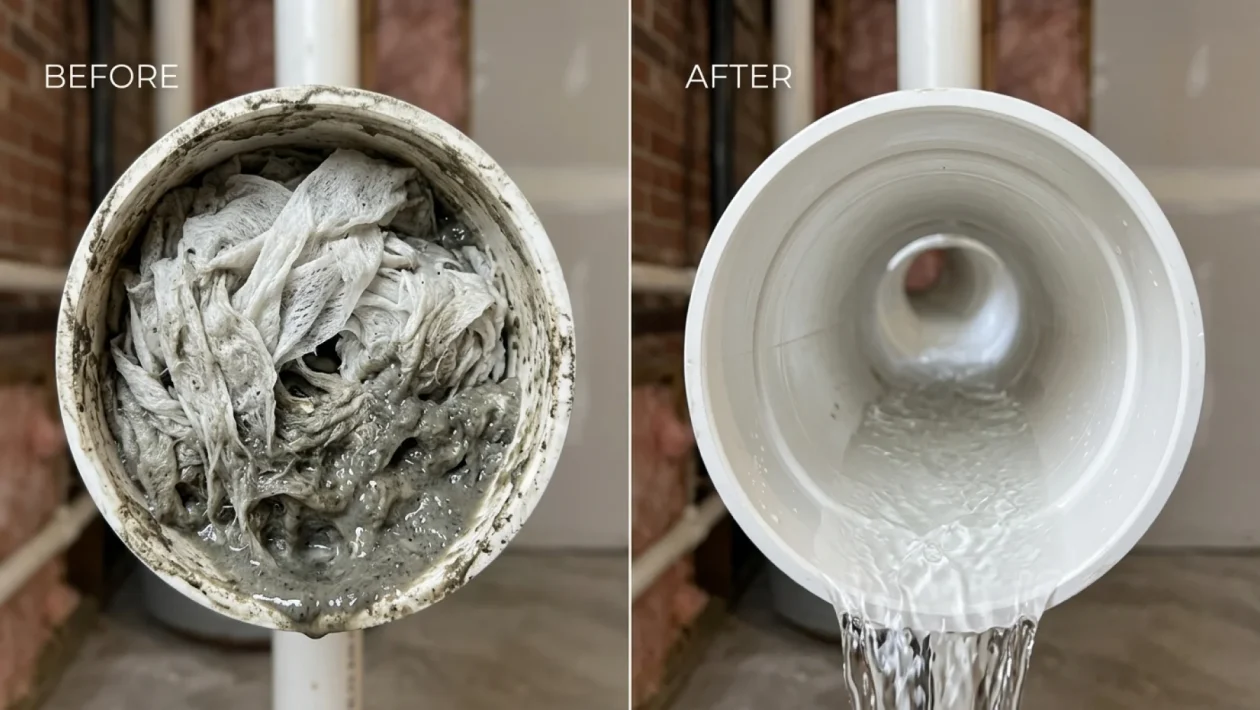
Unlike standard toilet paper, which practically dissolves the second it hits the water, wet wipes stay completely intact. They travel down your pipes, snag on tiny imperfections, and immediately start collecting debris.
Before you know it, you are calling an emergency service like Roto-Rooter at 2 AM. You end up handing over thousands of dollars to a crew digging up your front lawn to replace a ruptured lateral line.
The Upcoming Plastic Ban Reality Check
By next spring, lawmakers and water bosses are officially rolling out a ban on the sale of wet wipes containing plastic. On paper, it is a massive environmental victory that everyone should celebrate.
To put the crisis into perspective, utility crews in the UK recently pulled 1 billion wet wipes from regional sewer networks in a single year. If you stretched those out, they would wrap around the Earth four and a half times. That equals 4,500 tonnes of underground waste—roughly the weight of 30 adult blue whales.
But here is the catch no one is talking about. Just because a wipe is biodegradable or plastic-free does not mean it breaks down fast enough in a fast-moving sewer system.
These new “eco-friendly” alternatives will still snag in your pipes. They will still combine with fats, oils, and grease to form those concrete-like blockages known as fatbergs.
“From what my team and I see day to day, banning the plastic just doesn’t go far enough to reflect the scale of the problem. A wipe is a wipe, and it will still overwhelm the system if you flush it.”
Pipeline Saving Solutions
You do not need to give up the luxurious clean of a wet wipe from brands like Cottonelle. You just need to drastically change how you dispose of them.
Protecting your home from a disgusting, expensive sewage backup comes down to sheer common sense and a little bit of daily discipline. Follow these steps to keep your plumbing flowing smoothly:
- Place a small, lined trash can with a secure lid directly next to your toilet specifically for wipes.
- Never pour cooking oils or bacon grease down the kitchen sink—this is the sticky glue that holds massive fatbergs together.
- Wipe out greasy frying pans with a paper towel and toss it in the garbage before washing the pan in the sink.
- Stick strictly to the legendary “Three Ps” rule when flushing: Pee, Paper, and Poo.
Want to know what a simple plumbing mistake actually costs? Here is a quick reality check on the financial damage of flushing the wrong things.
| Plumbing Nightmare | Estimated Cost (CAD/USD) |
|---|---|
| Clearing a basic indoor toilet clog | $150 – $300 |
| Snaking the main sewer line | $300 – $600 |
| Repairing a flooded basement | $2,500 – $10,000+ |
| Replacing a broken sewer lateral | $5,000 – $15,000 |
Frequently Asked Questions
Are baby wipes worse than flushable wipes?
Yes. Baby wipes are typically thicker, larger, and heavily infused with tough synthetic fibers. They are absolutely lethal to household plumbing and should never enter a toilet bowl under any circumstances.
Can I safely flush biodegradable wipes?
No. Biodegradable simply means the product will eventually break down in a landfill or commercial compost facility over several months. It will definitely not break down in the mere hours it takes to travel through your local sewer network.
What if my house is on a private septic system?
If you are on a septic tank, flushing flushable wipes is basically financial suicide. They do not dissolve in the holding tank, meaning you will need to pay for professional pump-outs much more frequently, or worse, replace your entire weeping tile field.
🤝 Good luck navigating the new wild west of plastic-free bathroom products this summer! Just remember that the toilet is a highly engineered waste disposal unit, not a magic trash can.
💡 Make the smart choice and grab a dedicated bathroom bin today. Your pipes, your wallet, and your local wastewater workers will thank you for making their jobs a little less gross.
📱 Share your thoughts or horror stories with the community below. Have you ever had to deal with an expensive plumbing backup because someone flushed something they shouldn’t have?
👇 Drop a comment and let me know how you are adapting your household habits ahead of the big plastic ban next spring!