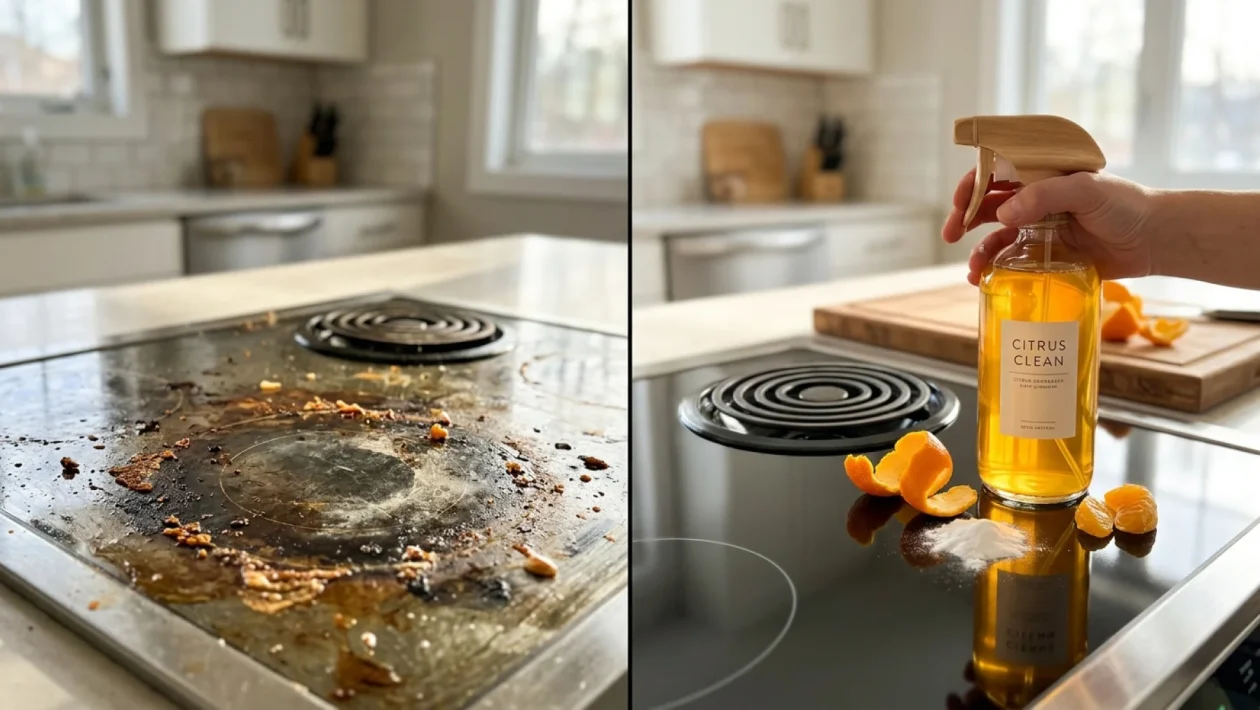
We’ve all been there. You’re staring down a stove covered in hardened cooking oil, reaching for a harsh chemical spray that burns your lungs and empties your wallet.
Store-bought supplies are getting ridiculously expensive, but the ultimate grime-fighting solution is probably sitting in your compost bin right now.
By combining leftover citrus skins with basic pantry staples, you can brew a heavy-duty wash that cuts through baked-on mess instantly.
It is time to stop throwing out your food scraps and start putting them to work.
Orange Peel Cleaner: Don’t Toss Your Citrus Leftovers
The foundation of this Orange Peel Cleaner relies on saving your citrus scraps. Tossing them in the freezer is a brilliant strategy to stockpile raw materials without any immediate waste.
When you boil these saved rinds in water, you extract natural oils that are incredibly hostile to grease. This concentrated liquid base smells fantastic and serves as the perfect starting point for our formula.
Did you know the average North American household blows over $280 a year just on specialty surface sprays? Making your own cuts that number down to practically nothing.
The Baking Soda Degreaser: How The Chemistry Works
Adding baking soda to your hot citrus water is where the real magic happens. As soon as the powder hits the hot liquid, you get a highly active fizzing reaction.
This bubbling action unlocks deep-cleaning properties, neutralizing foul kitchen odors instantly. When you combine this with the heavy-duty grease-cutting power of a premium commercial soap like Dawn, the resulting liquid refuses to separate.
“The D-limonene found naturally in citrus rinds is an industrial-grade solvent. When paired with the mild abrasive and deodorizing nature of sodium bicarbonate, it creates a surprisingly aggressive household cleaner.” – Mark Davies, Green Chemistry Consultant
To give the solution a bit of abrasive muscle, we also mix in plain table salt. The salt helps lift stubborn, stuck-on food from your favorite pans without scratching the finish.
Rescues Messy Kitchens: Where To Apply Your New Mix
This homemade formula is a lifesaver for the highest-traffic areas in your home. You can confidently apply it to glass cooktops, stainless steel appliances, and stone countertops.
It is exceptionally effective at eliminating that lingering fried-food smell after a big dinner. Because you are using familiar ingredients like Arm & Hammer baking soda, it is completely food-safe for daily use.
It also works wonders on heavily soiled dinnerware. A quick soak in this citrus solution makes washing greasy pots, pans, and olive-oil-coated plates completely effortless.
The 4-Step Brewing Process
Ready to make a batch? Grab the skins of three large oranges, two tablespoons of baking soda, two tablespoons of salt, and two small bottles of neutral dish soap.
- Extract the Oils: Boil your frozen or fresh citrus scraps in water until the liquid turns a rich, golden color.
- Add the Powders: Remove the skins, keep the liquid hot, and thoroughly dissolve your salt and baking soda into the mix.
- Stabilize the Temp: Shock the hot liquid with a splash of room-temperature water to cool it down quickly.
- Incorporate the Soap: Slowly stir in your commercial dish soap. Mix gently for a few minutes and let the foam settle naturally before pouring it into your storage bottles.
Do not spray rubbing alcohol to kill the foam. Let it rest, and you will maintain the perfect, thick consistency.
Quick Comparison: DIY vs. Store-Bought
By stretching two bottles of commercial soap into more than six bottles of fortified cleaner, the math speaks for itself.
| Feature | Homemade Citrus Mix |
|---|---|
| Total Yield | 6+ Bottles |
| Estimated Cost | Under $5.00 total |
| Harsh Fumes | None (Natural scent) |
| Shelf Life | Up to 90 days |
Frequently Asked Questions
Can I use lemons or grapefruits instead?
Absolutely. Any thick-skinned citrus fruit contains the natural D-limonene oil needed to cut through stubborn grease. Lemon actually provides an even brighter, sharper scent.
How should I store the finished product?
Keep your liquid in clean, recycled squeeze bottles or heavy-duty sprayers. Store them in a cool, dark cabinet under the sink, and they will stay perfectly potent for up to three months.
Will the salt scratch my glass stove?
No. Because you are fully dissolving the salt into the hot liquid during the brewing phase, it leaves no gritty residue behind. It simply acts as a microscopic lifting agent for the grime.
🤝 Good luck brewing up your very first batch of this citrus powerhouse this weekend.
💡 You will be shocked at how effortlessly it slices right through that stubborn stovetop grime.
📱 Drop a comment below and share your thoughts on how it worked for your toughest pots and pans.
👇 Hit that share button to save your friends and family some serious cash on their grocery bills!