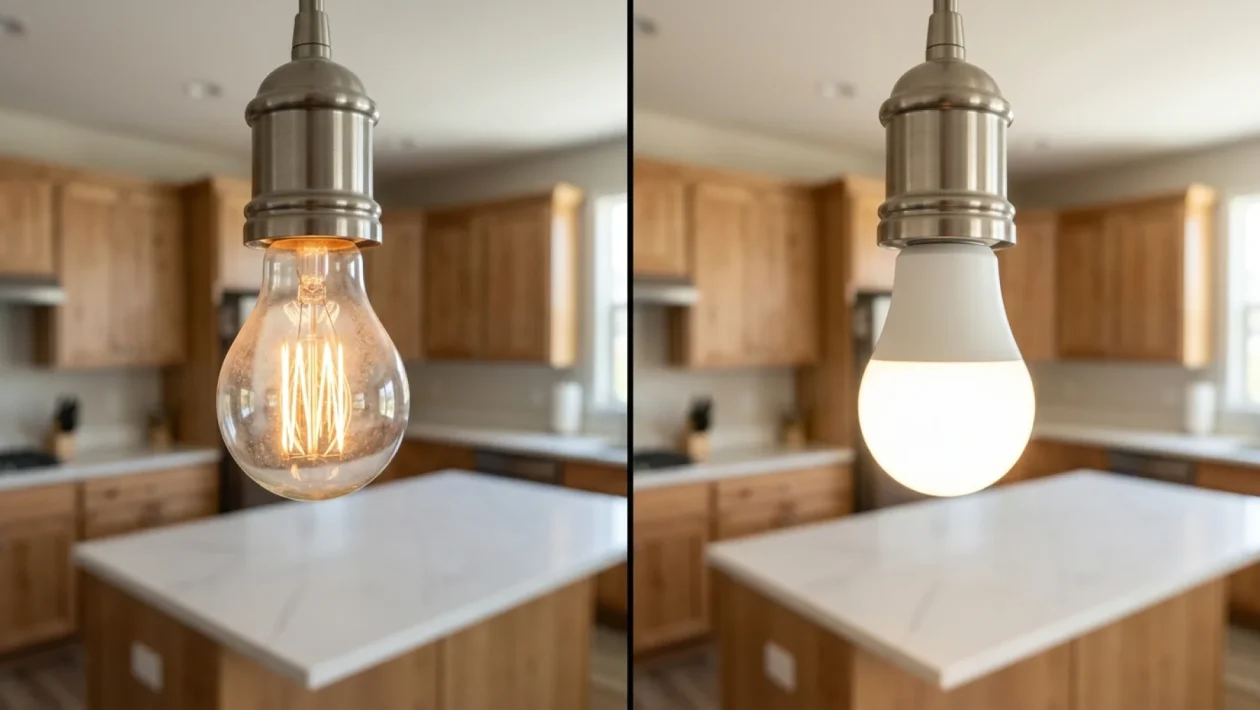
Look at your last hydro bill. If you’re like most folks right now, that number is creeping up faster than a weed in a July garden. We are all searching for ways to stop the financial bleeding without sitting in the dark. The ultimate solution isn’t some massive solar panel investment; it’s literally unscrewing the outdated glass domes hovering above your kitchen island.
There is a massive push right now from major power providers to absolutely kill off incandescent light bulbs. And honestly? It’s about time. Scrapping this incredibly inefficient technology is the easiest, lowest-cost home upgrade you can make today to keep hundreds of dollars in your pocket.
The Incandescent Bulb Ban: Why It’s Finally Happening
Energy networks are feeling the strain. We are electrifying everything, from the cars in our driveways to the heat pumps in our yards. But why are we still using Thomas Edison-era tech to light our hallways?
Power companies across the globe are pushing for a total Incandescent Bulb Ban, arguing that forcing a shift to LEDs will lower unit costs and secure the energy grid for everyone. It’s not just corporate talk. When you ditch inefficient tech, the entire system breathes easier.
“One dollar of electricity buys you 250 hours of LED lighting, but it also will buy you just 25 hours of incandescent bulb lighting. It’s 10 times better to have LED bulbs.”
That is a staggering reality. You are quite literally burning money just to keep the lights on in the evening.
Trashing Your Old Lights: The Swap That Makes Sense
I know the familiar warm glow of a 60-watt incandescent is nostalgic. But keeping them around is a terrible financial decision.
If you head down to your local Canadian Tire or hardware store this weekend, you’ll see shelves packed with modern LEDs that perfectly mimic that old-school warm aesthetic. You don’t have to sacrifice comfort for efficiency.
Ready to make the switch? Here is exactly how to tackle your home lighting overhaul this weekend:
- Do a room-by-room audit: Count every single active incandescent bulb in your house. The average home has about 15 of them hiding in lamps, closets, and ceiling fixtures.
- Match your lumens and color: Don’t look at watts anymore. Look for “Warm White” (2700K to 3000K) to keep that cozy, traditional vibe in living spaces.
- Dispose responsibly: Trashing your old lights doesn’t mean throwing them in the regular garbage. Check your local municipal recycling center for proper glass and filament disposal.
- Check your appliances: While upgrading bulbs, take 60 seconds to set your dishwasher and washing machine to run during evening off-peak hours.
Saving You $300 A Year: The Real Cost Breakdown
Let’s talk turkey. If you have an average house with 15 standard light bulbs, the math heavily favors making the switch right now.
Most folks feel like they can’t control their total energy costs. But changing your behavior and swapping out the simple stuff makes a massive, collective impact.
| Lighting Type | Estimated Annual Power Cost (15 Bulbs) |
|---|---|
| Old Incandescent Bulbs | $330+ |
| Modern LED Bulbs | $30 |
By simply twisting a wrist, you instantly save roughly $300 a year. No massive renovations, no financing required.
Frequently Asked Questions
Are incandescent bulbs actually illegal now?
Depending on where you live in North America, manufacturing and importing standard incandescents is highly restricted or outright banned. Power utility watchdogs are actively pushing to phase out the remaining stragglers completely to modernize the grid.
Do LEDs really last that much longer?
Absolutely. A quality LED will comfortably give you over 15,000 to 25,000 hours of life. You might move out of your house before you ever have to change that bulb again.
Does shifting my laundry to the evening actually help?
Yes. Many local utilities operate on a “time-of-use” billing system. Delaying your heavy appliances until evening off-peak times drastically reduces your bill, even if you are using the exact same amount of electricity.
Wrapping It Up
🤝 It is time to take back control of your hydro bill. Phasing out old technology isn’t about losing choices; it’s about making your household run leaner and smarter.
💡 Upgrading your home doesn’t always require a contractor. Sometimes, it just takes a quick trip to the hardware store and ten minutes of unscrewing old glass.
📱 Good luck with your weekend project! If you’ve already made the switch to a fully LED home, I’d love to hear how much it dropped your monthly expenses.
👇 Share your thoughts with your neighbors and let’s keep more of our hard-earned cash where it belongs—in our own pockets.