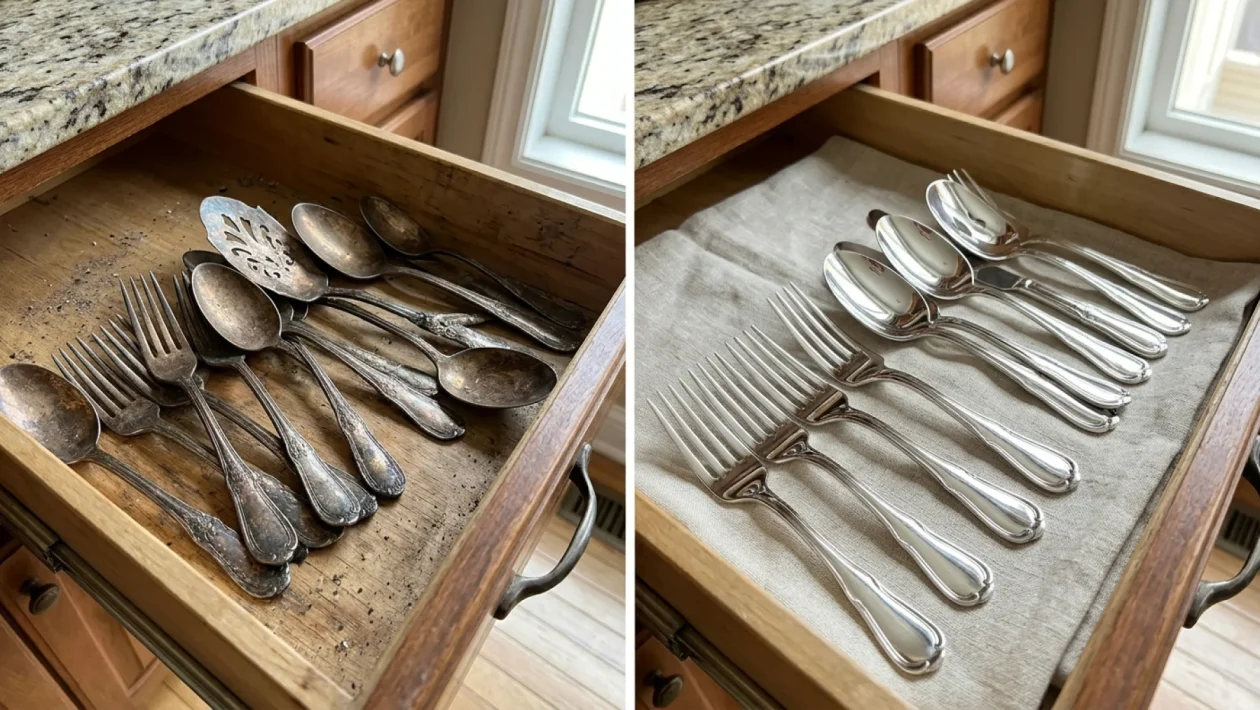
You are knee-deep in a summer kitchen purge when you pull out a dusty box of heavily tarnished forks. Before you chuck them into the local thrift store pile, take a much closer look. You could be holding a small fortune disguised as dirty metal. Today, we are talking about how to turn your forgotten clutter into serious cash.
Vintage silverware: The dining room comeback of the decade
Decades ago, heavy silver sets were a staple at every North American holiday dinner. They were the pride and joy of the dining room.
Eventually, they became “uncool” as younger generations rejected the hassle of hand-polishing their dishes. Thousands of beautiful sets were dumped at flea markets or shoved into dark attics.
But trends always cycle back, and vintage silverware is currently exploding in popularity for high-end home styling. In fact, according to recent antique auction data, the global demand for complete vintage tableware sets has skyrocketed by nearly 400% over the last three years alone.
Could be hiding: Digging up your family’s forgotten treasures
Most folks inherited these pieces and promptly forgot they even existed. They are rarely displayed out in the open anymore.
You will usually find them tucked away in old sideboards, basement storage bins, or that dreaded kitchen junk drawer. When you are hunting, don’t just look for standard forks and knives.
Keep your eyes peeled for silver ladles, cake servers, ornate cheese sets, and heavy candlesticks. These unique serving pieces often hold immense standalone value.
A $4,500 fortune: Cashing in on your grandmother’s cutlery
The secondhand market for these shiny relics is incredibly lucrative right now. A standard four-piece setting can easily fetch a few hundred bucks online.
If you stumble upon a complete, pristine set for twelve people, you could be looking at a payout of up to $4,500 CAD. That is a free vacation just sitting in a cardboard box.
Brands matter heavily here. If you spot a hallmark from an iconic Canadian silversmith like Birks, the value instantly shoots up compared to mass-produced department store flatware.
In your kitchen drawers: Separating the trash from the treasure
Not everything that shines is a goldmine. You need to know if you are holding solid silver, silver-plate, or just polished aluminum.
Solid silver feels noticeably heavier in your hand and tends to tarnish to a dark, almost brownish-black hue over time. Aluminum stays dangerously lightweight and simply turns a dull, matte gray without that heavy dark tarnish.
Always check the back of the handle for a hallmark or control stamp before you make any assumptions.
“If you see the word ‘Sterling’ or the numbers ‘925’ stamped on the handle, you’ve hit the jackpot. If it says ‘EPNS’ or ‘A1’, you’ve got electroplated nickel silver—great for eating, but not worth much cash on the antique market.” – James Harrington, Antique Appraiser
Here is a quick breakdown to help you spot the difference at a glance:
| Material | Identifying Features |
|---|---|
| Solid Sterling Silver | Heavy weight, dark brown/black tarnish, stamped with “925” or “Sterling”. High value. |
| Silver-Plated | Lighter weight, stamped with “EPNS” or brand names. Base metal may show through. Low value. |
The foolproof 3-step method to revive dead silver
Found a heavy set but it looks like it was buried in the mud? Don’t panic.
You do not need expensive, toxic chemicals to bring back that gorgeous mirror shine. Here is my foolproof, natural method for reviving tarnished silver right at your kitchen sink:
- Mix a generous tablespoon of baking soda with a little warm water to create a thick paste.
- Apply the paste to a soft microfiber cloth and gently rub the tarnished areas in straight lines.
- Rinse the silver thoroughly under warm water and immediately dry it with a clean towel to prevent water spots.
Frequently Asked Questions
Does polishing my silver reduce its antique value?
For standard flatware, polishing is perfectly fine and actually makes it easier to sell. However, if you have an incredibly rare, historically significant piece from the 1800s, leave the “patina” alone and consult an expert first.
Can I sell incomplete or mismatched sets?
Absolutely. Many buyers purposely look for mismatched vintage silverware to create a trendy, bohemian aesthetic for their dining tables. Individual serving pieces like cake trowels always sell well on their own.
🤝 Good luck hunting through those old basement boxes this weekend.
💡 If you find something that feels heavy and looks promising, get it professionally appraised before taking the first lowball offer online.
📱 Have you ever found a hidden, valuable treasure tucked away in your own house?
👇 Drop a comment below and share your thoughts—I read every single one!