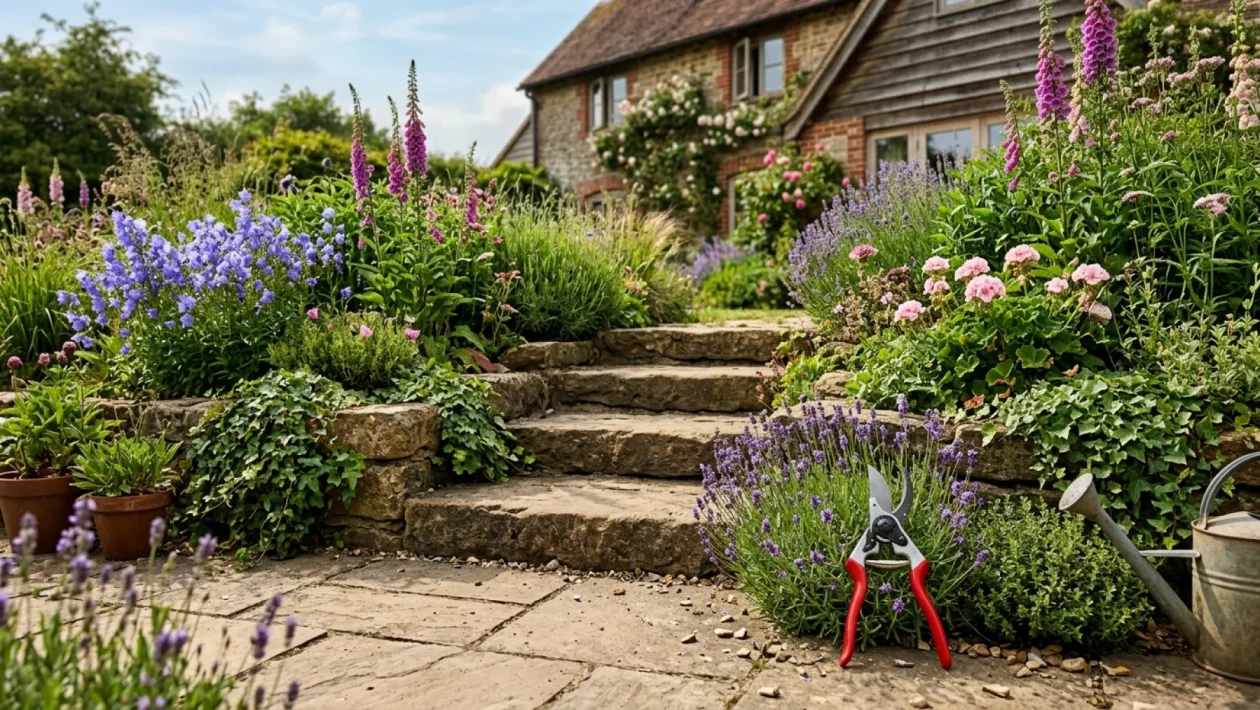
Your backyard shouldn’t feel like a sterile putting green, and it definitely shouldn’t look like an abandoned weed lot. The ultimate outdoor flex right now is structured wildness. If you’ve ever caught a glimpse of George and Amal Clooney’s Oxfordshire estate, you know exactly what I mean.
We are going to tear up the traditional, cookie-cutter landscaping playbook. Instead, we are building a heritage-style sanctuary that actually feels lived in. Best of all, we are doing it without tying you to a lawnmower every weekend.
Here is a wild reality check: a recent landscaping survey revealed that North American homeowners waste an average of 74 hours a year just edging and mowing perfectly square lawns. That is madness. Let’s ditch that exhausting routine for a setup that thrives on looking beautifully undone.
Building An English Country Garden
The quintessential English Country Garden is all about organized chaos. It is a masterclass in contrasting textures and colors, blending rigid hardscaping with unruly, creeping foliage.
You aren’t trying to tame nature here. Instead, you are just giving it a polite nudge in the right direction. The goal is to create a space that feels like it has been growing untouched for a century.
To pull this off authentically, you need to rely on classic cottagecore plants. We are talking about towering foxgloves, campanulas, and sweeping geraniums. These native-feeling blooms add a traditional heritage vibe that instantly elevates a standard patio into a private estate.
Executing The Clooney Blueprint
George and Amal didn’t just plant a few shrubs at their 17th-century Mill House. They orchestrated a brilliant collision between heavy sandstone steps and free-flowing greenery.
Their approach relies heavily on vertical growth. Vines crawl up the manor walls, flowering euphorbia spills over staircase railings, and subtle pink blooms peek through dense ivy. It is romantic, rugged, and entirely intentional.
“Your cottagecore garden should be a space with a cozy, whimsical aesthetic. It should be in between curated and wild, looking slightly undone, but also purposeful.”
You don’t need a multi-million dollar budget to steal this look. You just need to embrace muted pastel palettes—think soft purples, blues, and pinks—nestled among wild grasses.
Keeping It Low-Maintenance
Since we are currently sweating through a scorcher of a July in 2026, the last thing you want is a yard that demands daily upkeep. The beauty of this aesthetic is that a little overgrowth actually makes it look better.
To keep things easy, grab a pair of heavy-duty pruners—I always rely on the professional-grade Felco shears you can grab at Lee Valley Tools—and follow this simple establishment phase.
- Plant for height first: Anchor your garden beds with tall, low-effort perennials like sweet autumn clematis. They return every single year with zero fuss.
- Layer the mid-ground: Drop in some drought-tolerant shrubs like lavender. They smell incredible and require almost no watering once established.
- Soften the edges: Plant creeping thyme or English ivy near your walkways. Let them naturally spill over your rigid borders to blur the lines between stone and soil.
- Let it go: Stop obsessing over deadheading every single flower. The seed pods add texture and feed local birds heading into the late summer.
Designing A Rustic Backyard
You cannot achieve this aesthetic with slick, modern concrete pavers. You need texture, grit, and natural imperfections. We are talking about stepping stone paths, rugged cobblestone borders, and weathered rock.
You don’t need to rip up your whole yard either. Sourcing rugged, natural limestone from a trusted North American supplier like Banas Stones and laying it right over gravel or soil instantly adds that old-world charm.
Take a look at how different materials impact your rustic vibe and your wallet:
| Hardscaping Material | Vibe & Practicality |
|---|---|
| Natural Sandstone Steps | Premium, heritage look. Excellent grip, but requires a larger upfront investment and heavy lifting. |
| Limestone Stepping Stones | Perfectly unpolished. Cheap, DIY-friendly, and ideal for creating winding, whimsical garden paths. |
| Reclaimed Cobblestone | The ultimate rustic border material. Great for sectioning off wild bedding plants without looking too neat. |
Frequently Asked Questions
Can I pull off this look in a tiny urban yard?
Absolutely. If you are short on ground space, grow up. Utilize heavy ridged planters and train climbing roses or ivy up your fences. Container planting still delivers that dense, jungle-like English garden feel if you layer your heights correctly.
Will English ivy destroy my brick walls?
It can if your brick is old and crumbling. If you are worried about your mortar, use a wooden trellis mounted a few inches away from the wall. This gives you that lush vertical greenery without risking structural damage to your home.
Do I need to water these plants constantly?
Not if you choose the right ones. Once established, plants like yarrow, euphorbia, and climbing roses are incredibly resilient. Mulch heavily in the spring to lock in moisture, and let the summer rain do the heavy lifting.
🤝 Good luck getting your hands dirty this weekend, folks! Building a garden that practically takes care of itself is the best investment you can make in your property.
💡 Remember to embrace the imperfections, because a few wild vines and mossy stones are exactly what gives a space its soul.
📱 Share your thoughts on this structured-wild aesthetic. Are you team manicured lawn, or are you ready to let things grow a little crazy?
👇 Drop a comment below and let me know what climbing plants you are adding to your yard this summer!