You flick on the kitchen light for a midnight snack, and a dark shadow scatters under the stove. It is a gut-wrenching feeling that immediately makes your skin crawl.
Before you douse your entire kitchen in harsh chemical sprays, let’s talk about a natural, breathable alternative. You can strategically use cockroach repellent plants to build an invisible barrier around your home.
Here is a terrifying hard fact: a single female cockroach can produce up to 400 offspring in just one year. That means preventing them from moving in is critical.
Since we are deep into July 2026 and insect activity is aggressively high, adding specific botanicals to your home defense strategy just makes sense. Let’s break down exactly how you can use greenery to keep the creepy-crawlies outside where they belong.
The Truth About Cockroach Repellent Plants
Let’s get one thing straight right out of the gate. Plants are not exterminators.
If you have an active infestation, greenery will not evict them. You need to call in the professionals immediately.
However, as a preventative measure, cockroach repellent plants are brilliant. Insects rely heavily on their sense of smell to navigate and find food.
By introducing strong, overpowering scents into their favorite hiding spots, you disrupt their radar. Cockroaches love dark, warm, and humid areas.
They typically hide behind the refrigerator, beneath the stove, inside humid cabinets, or near floor drains. Placing the right botanicals near these entry points forces scouting bugs to turn around and look elsewhere.
“Think of aromatic plants as an invisible ‘Do Not Enter’ sign. They won’t destroy an active nest, but a strong mint or lavender scent near a drafty window absolutely deters a scouting insect from coming inside.” – Mark Davis, Veteran Pest Control Specialist
3 Decorative Options To Guard Your Home
You do not need an ugly pest trap sitting on your counter. Instead, you can use these 3 decorative options that look incredible and smell fantastic to humans.
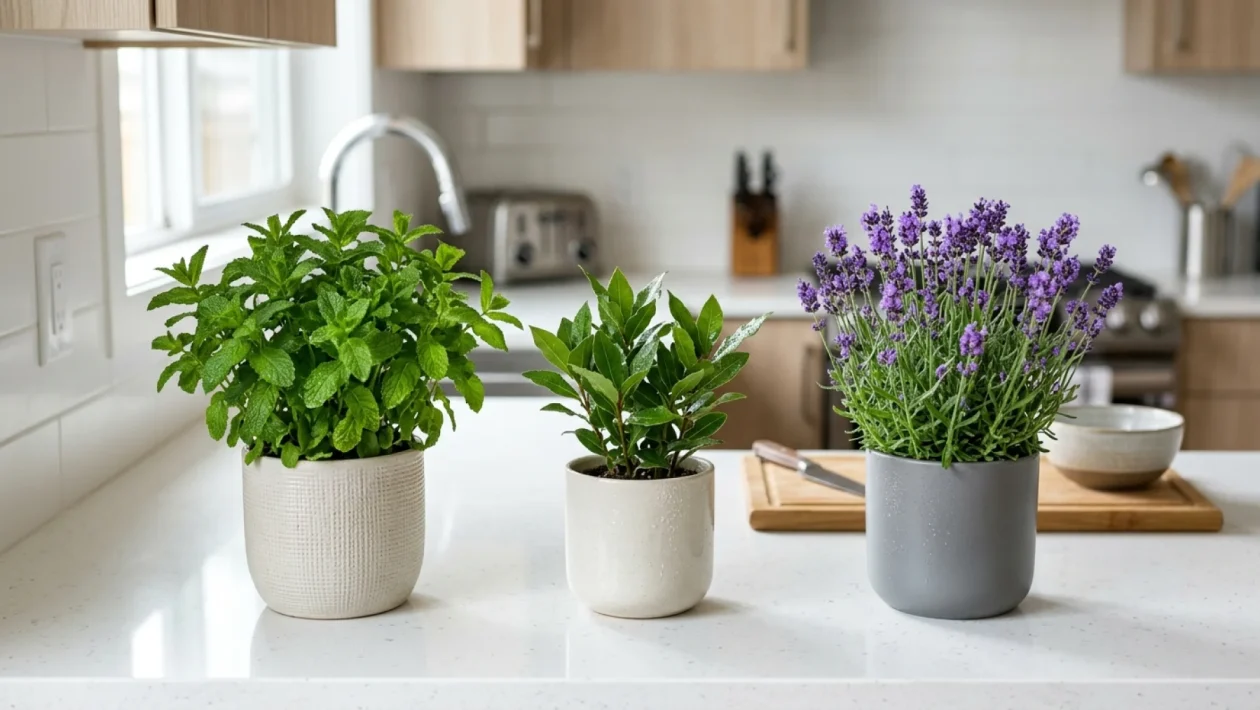
First up is Mint. This aggressive grower releases a powerful menthol aroma that roaches absolutely despise.
Mint is highly versatile. It looks great on a kitchen island and works flawlessly near bathroom windows where moisture attracts bugs.
Next is the culinary classic, Bay Leaf (Laurel). We love it in soups, but insects are terrified of its sharp, earthy scent.
You can keep a live bay laurel plant near your kitchen entryway. You can also dry the leaves and scatter them directly inside your pantry shelves to protect your dry goods.
Finally, we have Lavender. Known for its relaxing properties, this beautiful purple plant is a nightmare for pests.
When healthy and watered, lavender releases a heavy dose of essential oils. Keep a pot on your balcony, terrace, or right by the back door.
| Plant Name | Best Placement Strategy |
|---|---|
| Mint | Bathroom windows, under kitchen sinks, near drains. |
| Bay Leaf (Laurel) | Kitchen entryways, dried inside pantry cabinets. |
| Lavender | Balconies, terraces, and sunny window ledges. |
Why These Thrive Perfectly In Small Spaces
You might be thinking, “I live in an apartment, I don’t have room for a garden.” The beauty of these specific herbs is that they are tailor-made for small spaces.
They do not require massive garden beds to thrive. In fact, keeping them confined to pots actually prevents fast-growers like mint from taking over your house.
If you want to maximize their effectiveness in tight corners, follow this simple setup process:
- Head to your local hardware store—like a nearby Canadian Tire or Home Depot—and grab small, well-draining ceramic pots.
- Pot your herbs using a premium indoor potting mix to avoid introducing outdoor soil gnats.
- Place the pots strategically in high-traffic pest zones, ensuring they get the required sunlight.
- Every few days, gently rub or crush a single leaf between your fingers to release a fresh burst of repelling essential oils into the room.
It takes less than ten minutes to set up. Plus, you get the added bonus of fresh herbs for your next dinner recipe.
Frequently Asked Questions
Do these plants actually kill cockroaches?
No, they do not kill them. The essential oils simply act as a strong deterrent that masks the smell of food and makes the environment highly unpleasant for the insects.
What are the dark brown, pill-shaped things behind my fridge?
Those are likely oothecae, which are cockroach egg capsules. If you spot these, a plant will not save you. Vacuum them up immediately, sanitize the area, and call a professional pest control service.
Can I use essential oil sprays instead of real plants?
Yes! If you lack natural light for a live plant, mixing water with a few drops of pure peppermint or lavender essential oil is a great alternative. Spray it along baseboards and window tracks weekly.
🤝 Listen, keeping your home pest-free doesn’t have to mean living in a cloud of chemical bug spray.
💡 By utilizing nature’s own defenses, you can keep your kitchen smelling fresh and those disgusting intruders out in the cold.
📱 Drop a comment below and share your thoughts on natural pest control, or let me know what trick has worked best for your home!
👇 Good luck, stay vigilant, and keep those windowsills green!