If you’re a parent refereeing another living room wrestling match right now, you are probably exhausted. But what if I told you that putting your older kid in charge of the little one—just a bit—is the ultimate parenting cheat code? We spend a fortune trying to teach our kids how to be good people, but the absolute best training ground is sitting right down the hall. Sibling caregiving isn’t just about giving you a five-minute breather to drink a lukewarm coffee.
Psychology actually proves that when older kids help care for their younger siblings, it hardwires their brains for success. They develop extreme empathy, rock-solid responsibility, and an incredible knack for resolving conflicts. Today, we are breaking down exactly why this family dynamic is the secret weapon to raising phenomenal adults.
Sibling Caregiving: The Foundation Of Family Bonds
Let’s get one thing straight right out of the gate. Sibling caregiving is not about turning your ten-year-old into a substitute parent. It is about shared family responsibility and building a team mindset.
When an older sibling steps up to help, they are getting real-world reps in patience and affection. Instead of buying another expensive empathy-building game from Mastermind Toys, just ask your oldest to help calm down a frustrated toddler. The cognitive leaps they make in those moments are staggering.
In fact, recent mid-2026 family psychology data reveals a surprising hard fact. Older siblings who participate in guided daily care routines are nearly 40% more likely to exhibit advanced conflict negotiation skills by the time they hit high school. They simply learn how to read the room better than their peers.
Shaping Unbreakable Emotional Intelligence
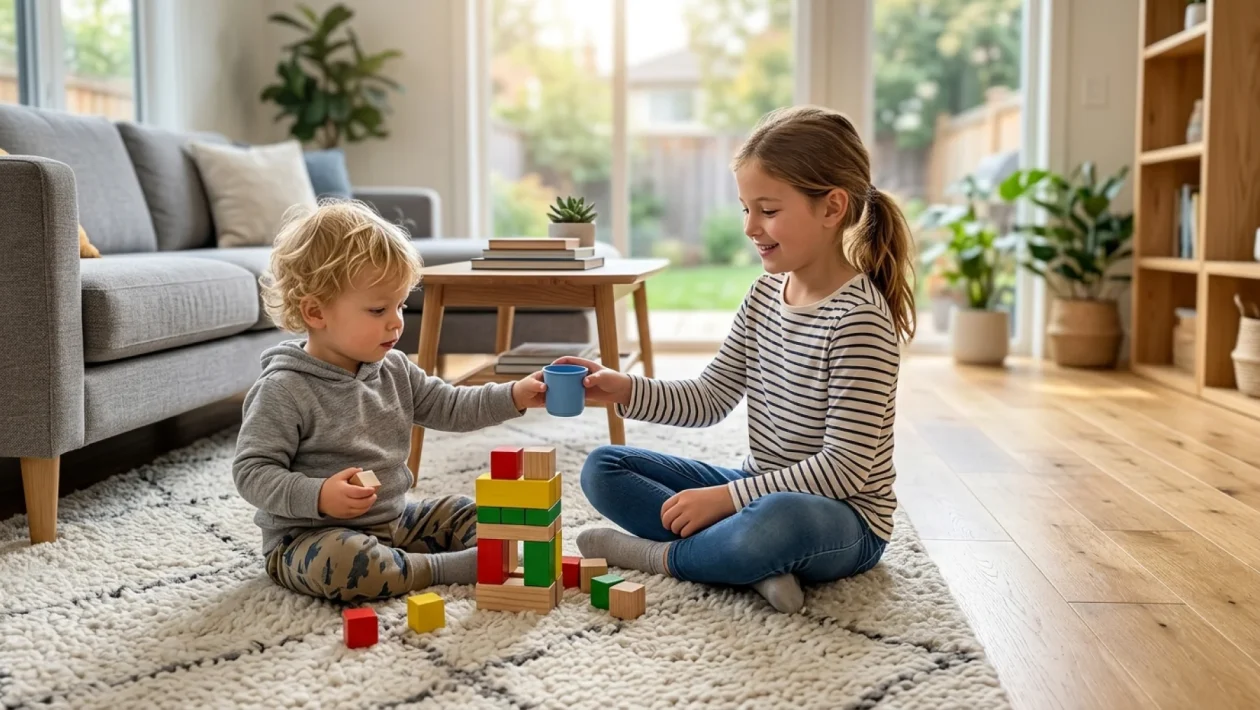
Emotional intelligence is the buzzword on every hiring manager’s lips these days, but it starts at home. When your older kid has to figure out why their little brother is crying over a blue cup, they are forced to step outside their own ego. Psychologists call this “cognitive decentration.”
It simply means they are learning to understand someone else’s point of view. Sibling caregiving acts as a hyper-speed accelerator for this skill. They learn to interpret desires, needs, and emotional states that are entirely different from their own.
When they share spaces and responsibilities, friction happens naturally. But these little spats are actually a goldmine. They are learning to negotiate, share, and console—prosocial behaviours that they will eventually use with their classmates and future coworkers.
Fostering Natural Leadership
A good leader doesn’t just bark orders; they guide with compassion and a sense of security. When an older sibling is trusted to watch over a younger one, they become a “secure base” for that child.
This dynamic completely transforms the older sibling’s confidence. They realize they are capable, trusted, and genuinely helpful. This reinforces their natural leadership and social assertiveness in ways a classroom setting rarely can.
“The home is an unparalleled school for socio-emotional development. When we allow an older sibling to help out in a balanced, guided way, we aren’t burdening them—we are giving them the tools to become highly empathetic and assertive adults.”
How To Guide Them (Without Overstepping)
There is a massive difference between asking for help and unfair “parentification.” You never want to overload a child to the point where they feel responsible for the family’s survival. The key to successful sibling caregiving is guidance.
You need to regulate their participation so it feels like a badge of honor, not a heavy chore. Here is the foolproof blueprint to make it work in your house:
- Start Small: Ask for low-stakes help, like fetching a diaper, picking out a bedtime book, or playing a quick game while you prep dinner.
- Praise the Effort, Not Just the Result: Acknowledge their patience publicly. Say things like, “I love how gentle you are being with your sister.”
- Maintain Firm Boundaries: Always remind them that you are the parent. If the younger sibling misbehaves, the older sibling should fetch you, not dish out discipline.
To keep things crystal clear, here is a quick cheat sheet on what healthy involvement looks like versus crossing the line:
| Healthy Caregiving (Do) | Harmful Parentification (Don’t) |
|---|---|
| Watching a sibling for 15 mins while you cook nearby | Being solely responsible for getting the toddler to bed |
| Helping tie shoes or locating lost toys | Disciplining, yelling, or punishing the younger child |
Frequently Asked Questions
What age is appropriate for an older sibling to start helping?
You can start fostering these skills as early as ages 4 or 5! Toddlers can bring you a wipe or hold a baby’s hand. As they grow, scale the responsibility up naturally, but always keep it age-appropriate and supervised.
Will asking them to help cause resentment?
Not if you frame it right. Resentment builds when kids feel like they are doing your job. If you frame sibling caregiving as teamwork and ensure they still have plenty of time for their own friends and hobbies, they will usually take pride in their “big kid” role.
Wrapping It Up
🤝 Parenting is a tough gig, but you don’t have to carry the entire load on your own shoulders. Letting your older kids pitch in is one of the greatest gifts you can give their developing brains.
💡 They aren’t just fetching a sippy cup; they are literally laying the bricks for a lifetime of empathy, patience, and stellar leadership. You are raising future adults who know how to care for others.
📱 Share your thoughts! How do your kids handle looking out for each other? Drop a comment below and let’s keep the conversation going.
👇 Good luck out there, keep the boundaries clear, and enjoy watching your little crew grow into an unstoppable team!