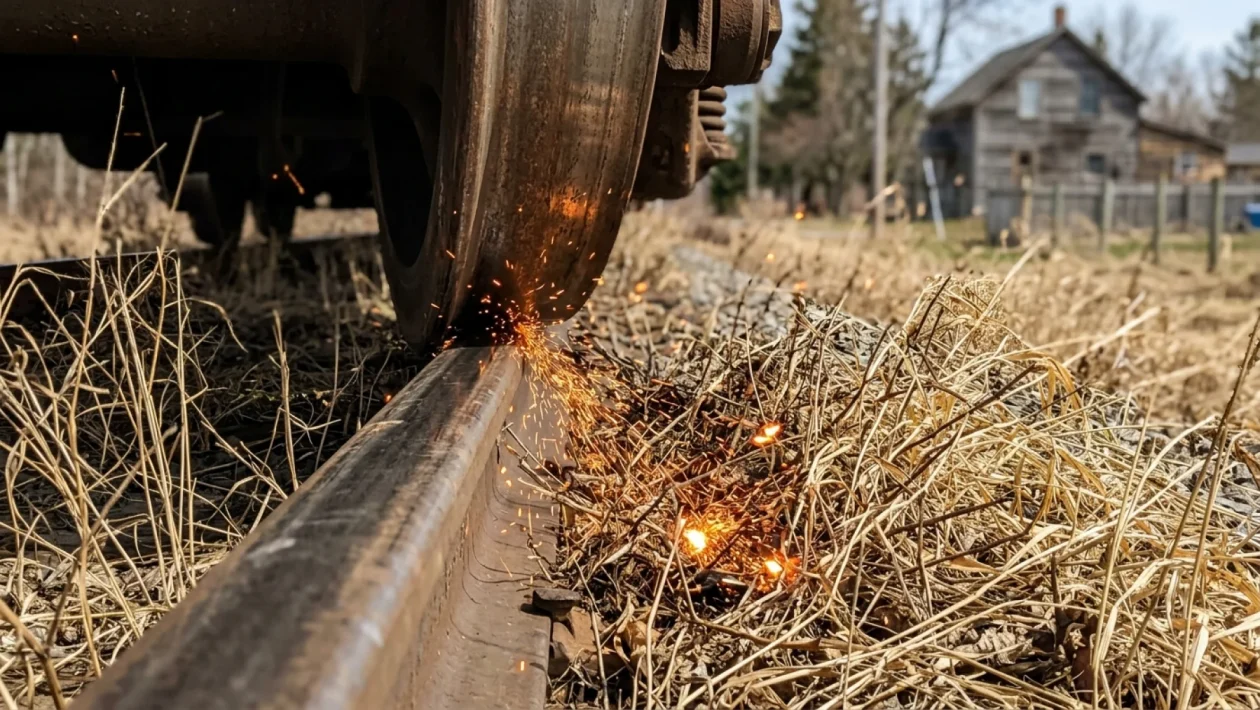
The rumble of a heavy freight train rolling through your town is usually just background noise, but right now, it is sparking serious anxiety—and literal wildfires. A vacant home recently burned down in Rogersville, New Brunswick, and frustrated locals are pointing their fingers directly at the railway tracks. If you live anywhere near a rail corridor this spring, you cannot just cross your fingers and hope the dry brush stays intact. We need to dig into exactly why these terrifying rail blazes happen, how local leaders are stepping up to the plate, and the dead-simple steps you must take to fire-proof your own backyard before the next train rolls through.
Railway Fire Prevention
Let’s talk about the gritty mechanics of Railway Fire Prevention and why trains are such a unique fire hazard. When thousands of tons of steel barrel down a track, the mechanical friction is absolutely immense. It is not just about the loud screeching; it is about microscopic pieces of superheated metal flying into the brush.
A seized brake shoe or a carbon spark blown from a locomotive exhaust can easily reach temperatures exceeding 1,000°C. When those sparks land on bone-dry spring vegetation, ignition is almost instantaneous. In fact, hard statistics show that railway operations account for roughly 4 to 5 percent of all human-caused wildfires in Canada.
While that percentage might sound small, these fires are exceptionally dangerous. They ignite in long, unbroken corridors that are often difficult for local fire departments to access quickly. This is exactly why CN Rail and other major operators are under intense pressure to maintain their right-of-ways and upgrade their spark arrestor technology.
How New Brunswick Communities Are Fighting Back
The people of Rogersville are not taking this threat lying down. When you lose property to a fire that arguably could have been prevented, the community demands immediate answers. Suspicion that passing trains sparked the recent devastating wildfires is running incredibly high.
Recently, Public Safety Minister Robert Gauvin hit the ground in Rogersville to meet directly with local government officials. They aren’t just pointing fingers; they are actively investigating the root cause of the blaze that took down a local home. More importantly, they are hammering out a concrete strategy to ensure this does not happen again.
“When you have a massive freight train hauling cargo through a dry rural corridor, a single mechanical failure can throw off a shower of sparks hotter than a blowtorch. Communities have every right to demand strict right-of-way clearing.”
The local government is pushing for stricter brush-clearing mandates along the tracks and faster emergency response protocols. For the folks living right on the edge of the rail line, this political pushback is a massive breath of fresh air. They want accountability, and they are finally being heard.
Against Train-Sparked Blazes
While the politicians and rail companies figure out the big picture, you need to protect your own acreage. You cannot control what happens on the tracks, but you absolutely control the fuel load on your property. Defending your home against train-sparked blazes requires a weekend of hard work and a bit of strategic landscaping.
I always tell folks to treat the edge of their property like a fortress wall. A quick trip to Home Depot or your local hardware store can arm you with the gear you need to build a defensive fire break. Here is my foolproof strategy for locking down your property line:
- Establish a Non-Combustible Zone: Strip all dead leaves, dry grass, and pine needles from the first 10 metres of your property line closest to the tracks. Replace this vegetation with gravel or crushed rock.
- Prune the Canopy: Trim tree branches so the lowest leaves are at least 2 metres off the ground. This stops ground fires from climbing up into the trees.
- Install a Water Station: Hook up a dedicated, heavy-duty garden hose that easily reaches the edge of the rail corridor. Keep it primed and ready during dry spring conditions.
Upgrading your yard does not have to drain your wallet. Here is a quick breakdown of what you can expect to spend to build a solid defensive line against wayward sparks:
| Fire-Smart Upgrade | Estimated Cost |
|---|---|
| Crushed gravel fire break (10m stretch) | $150 – $300 |
| Heavy-duty 100ft rubber yard hose | $60 – $90 |
| Professional tree pruning (base lifting) | $200 – $500 |
| Metal mesh screens for exterior vents | $40 – $80 |
FAQ Section
Who do I call if I see a small brush fire starting near the tracks?
Do not wait to see if it puts itself out. Call 911 immediately and specify that the fire is on a railway right-of-way. Give them the closest mile marker or railway crossing signal number if you can see one.
Can railway companies be held liable for property damage?
Yes, but it requires a thorough investigation. If local fire marshals determine that a train’s mechanical failure or poor track maintenance directly caused the fire, the railway company can be held financially responsible for the resulting property damage.
How often are railways required to clear brush?
Transport Canada mandates that rail operators keep their right-of-ways free of combustible hazards. However, the frequency of clearing varies by region, which is exactly why communities like Rogersville are demanding stricter enforcement.
🤝 Working together is the only way we are going to keep our communities safe this spring. You do your part in the yard, and let’s keep holding the rail operators accountable for theirs.
💡 Good luck out there, stay vigilant, and don’t hesitate to prep your property before the dry season peaks.
📱 Share your thoughts or your own property-prep experiences with your neighbors, because fire safety is a team sport.
👇 Stay safe, and I’ll catch you in the next one!