Imagine watching your active teenager’s spine twist out of alignment, knowing the only fix is a major, highly complex back operation. For years, parents and kids staring down a scoliosis diagnosis had to brace for a grueling surgical process relying on older, slower imaging tools. But the medical game in Canada just completely flipped on its head this spring.
We now have a groundbreaking solution that takes the guesswork out of placing spinal screws. It’s wildly accurate, significantly safer, and it’s already changing lives right here in the Maritimes.
What Exactly Is O-Arm Spinal Surgery?
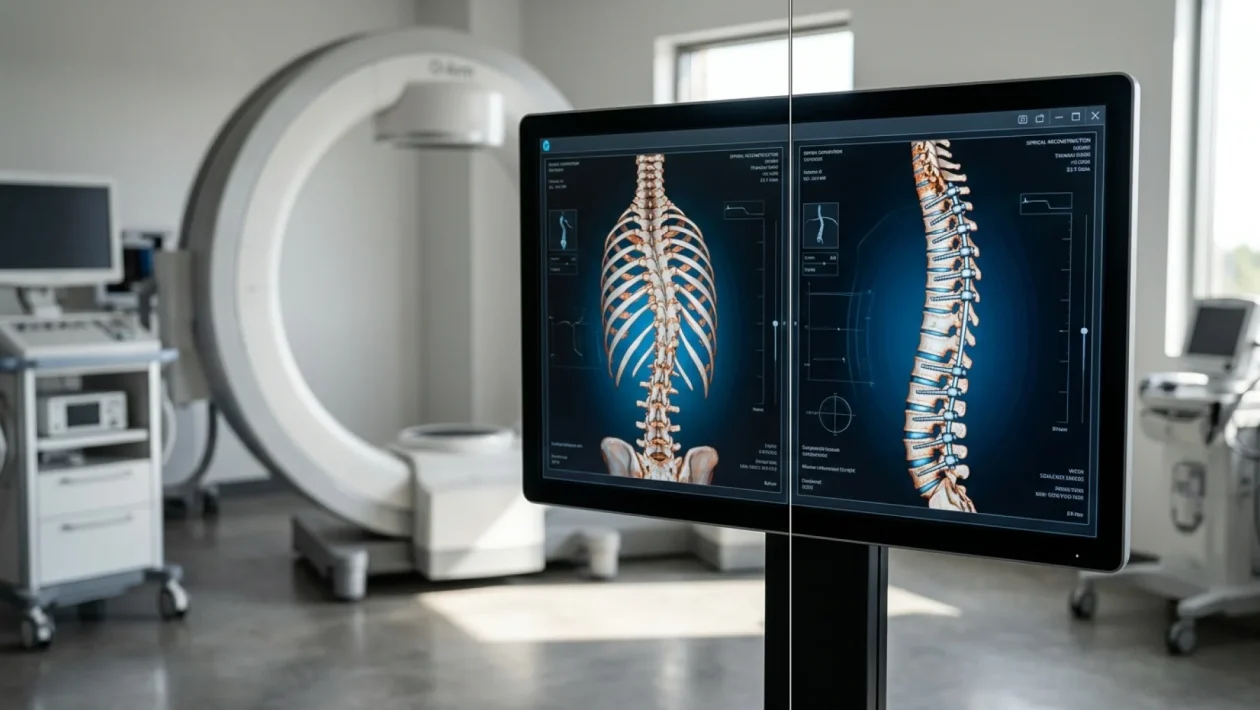
If you’re picturing something out of a high-tech sci-fi movie, you aren’t entirely off base. O-Arm spinal surgery relies on a massive, highly advanced imaging machine that literally forms a ring around the patient while they lie on the operating table.
While the original concept of the O-Arm has been around for a bit, the heavily upgraded version that just landed in Canada is a totally different beast. Think of it like swapping out an old, grainy tube TV for a cutting-edge 4K smart display.
Scoliosis actually affects around 2 to 3 percent of school-age kids across North America. When those spinal curves get severe enough, surgeons need to go in and anchor the vertebrae with hardware to straighten everything out.
Here is exactly how this upgraded machine tackles the job in the operating room:
- Full-Spine Scanning: Instead of taking multiple small images, the new O-Arm captures the patient’s entire spine in one swift, continuous pass.
- Real-Time 3D Mapping: The system instantly builds a flawless 3D model of the patient’s anatomy on monitors right inside the surgical suite.
- Pinpoint Navigation: Surgeons use the live 3D map like a highly precise GPS to guide the placement of screws into the bone with zero guesswork.
It’s all about giving the medical team an unparalleled view of the battlefield.
How 3D Tech Is Revolutionizing Patient Safety
Any time you’re dealing with x-rays or medical imaging, radiation exposure is a massive concern. This is especially true for young, growing bodies.
That’s exactly where this updated tech earns its keep. The new system features a dedicated pediatric radiation setting that drastically limits how much exposure a kid gets while they are under the knife.
Dr. Kevin Morash, an orthopedic surgeon at Halifax’s globally respected IWK Health Centre, has been entirely hands-on with this new equipment.
“The machine can now scan essentially a patient’s entire spine all at once. What’s more, the pediatric radiation setting represents a 70 per cent reduction in the amount of radiation a patient receives.”
That kind of drop in radiation isn’t just an incremental update; it’s a monumental win for patient safety.
Let’s break down exactly how the new setup compares to the older methods.
| Feature | The Upgraded O-Arm System |
|---|---|
| Imaging Scope | Scans the entire spine at once. |
| Radiation Levels | Drops pediatric exposure by an astonishing 70%. |
| Hardware Accuracy | Pinpoint 3D tracking ensures perfect screw placement. |
| Operating Time | Improves efficiency by eliminating repeated spot-scans. |
Transforming A Moncton Teen’s Spine: Molly’s Journey
Tech specs and medical jargon are great, but the real proof is in the patients. Enter 14-year-old Molly Johnston from Moncton, New Brunswick.
Molly’s mom first noticed her daughter’s shoulder awkwardly sticking out two years ago. Initially brushing it off as a dance camp injury, they soon discovered Molly was dealing with a serious case of scoliosis.
Despite the severe fatigue and noticeable back pain, Molly pushed through to keep dancing. But this past April, she made history as the very first patient in Canada to undergo surgery using this upgraded O-Arm technology at the IWK.
The results? Absolutely incredible. The very next day, the hospital staff had her up on her feet.
Not only is she recovering beautifully with her therapy dog Jetson by her side, but she actually grew two-and-a-half inches overnight as her spine was finally straightened out.
For parents like Marsha Johnston, the sheer accuracy of the O-Arm spinal surgery provided an immense level of comfort during one of the most stressful days of their lives.
Frequently Asked Questions
Is the O-Arm only used for scoliosis?
While the primary focus right now is on scoliosis and pediatric spine corrections, the upgraded O-Arm is incredibly versatile. Surgeons at the IWK have already begun utilizing it for complex pediatric pelvic surgeries as well.
How quickly do patients recover from this surgery?
Spinal fusion is still a major operation, but enhanced precision often leads to smoother recoveries. While full healing takes months, patients like Molly are typically up and walking within 24 hours and can aim to return to normal activities—like school or sports—within a few short weeks to months.
Will this technology be available across Canada?
Halifax’s IWK Health Centre pioneered the first upgraded machine this spring of 2026. However, given its massive success in boosting patient safety and operational efficiency, it’s highly likely we’ll see this equipment roll out to other major pediatric hospitals nationwide soon.
Wrapping It Up
🤝 Thank you for reading and spending a few minutes exploring the incredible medical advancements happening right in our own backyard.
💡 Medical breakthroughs like this upgraded 3D imaging remind us that even the most daunting diagnoses can be met with incredibly innovative solutions.
📱 If you found this helpful, don’t keep it to yourself. Pass this article along to any parents, friends, or family members who might find hope in Molly’s story.
👇 Share your thoughts in the comments below, and let me know what you think about this game-changing tech. Good luck to you and your loved ones on your own health journeys!