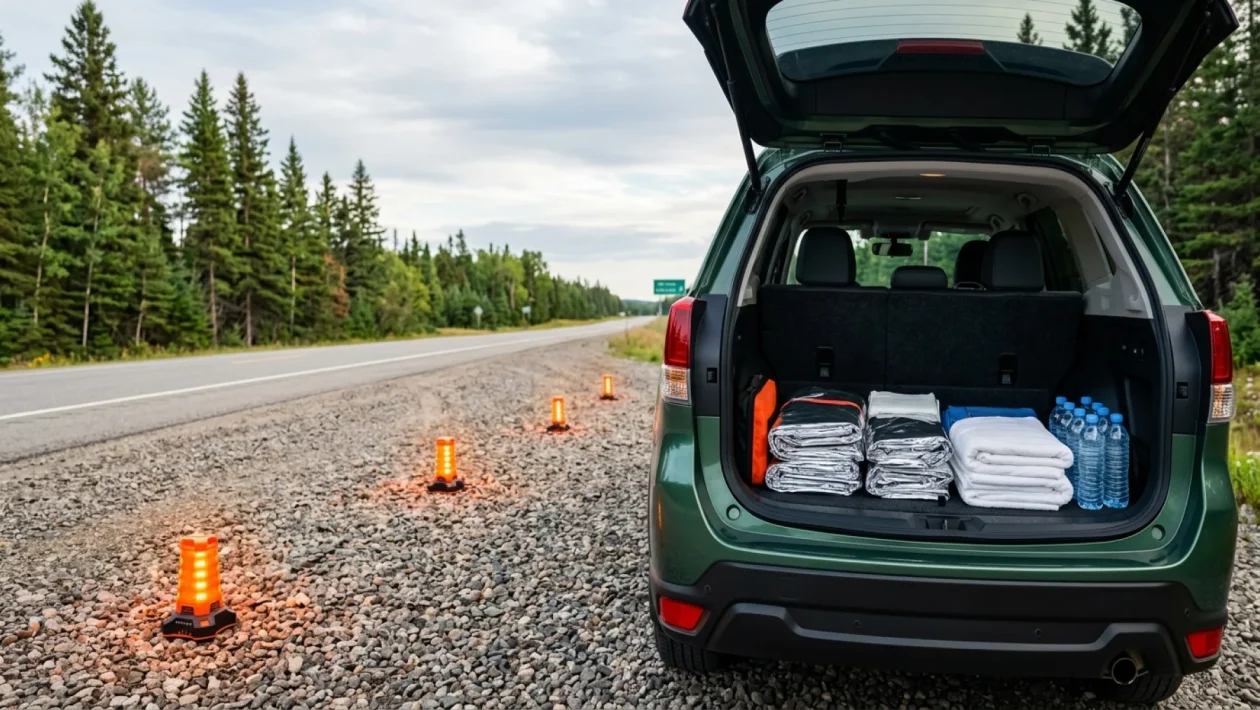
Imagine driving a loved one in active labour to your local hospital, only to discover the obstetrics department is abruptly closed. That nightmare became a reality recently for a New Brunswick family who was diverted from Waterville to Fredericton. They ended up delivering their son on the gravel shoulder of the Trans-Canada Highway. When the healthcare system drops the ball, you are the ultimate first responder. You need a rock-solid backup plan when forced into a roadside medical emergency.
Here in May 2026, the ongoing frustrations over medical transport delays are leaving families incredibly vulnerable. Relying blindly on the nearest clinic is no longer a safe bet. You must learn how to adapt, prep your vehicle, and take absolute control when things go sideways.
Roadside Medical Emergency
Nobody wakes up expecting to play paramedic on the shoulder of a bustling highway. Yet, a sudden roadside medical emergency is becoming an all-too-common scenario for folks living outside major urban centers.
The hard truth is that rural emergency departments face rolling closures due to severe staffing shortages. In fact, a recent report highlighted that nearly one in five rural Canadians have encountered an unexpected ER or department closure when they needed immediate care. That is a terrifying statistic if you are unprepared.
Your vehicle needs to be equipped for more than just a flat tire or a dead battery. It must serve as a temporary safe haven. Building a specialized emergency kit can literally mean the difference between life and death.
| Emergency Kit Essential | Practical Purpose |
|---|---|
| Heavy-duty thermal foil blankets | Prevents severe hypothermia and medical shock. |
| Sterile trauma pads & thick towels | Manages major bleeding or a sudden roadside birth. |
| High-visibility LED road flares | Keeps transport trucks from sideswiping you at night. |
| Bottled water & electrolyte packs | Maintains basic hydration during massive transport delays. |
Navigating Rural Hospital Closures
You cannot control provincial health budgets, but you can control your logistics. Navigating rural hospital closures requires a proactive, defensive driving mindset.
Before you hit the road for an expected medical visit—especially for high-risk situations like late-stage pregnancy—always call ahead. Verify that the specific department you need is actually open and fully staffed. Do not just assume the lights are on because they were yesterday.
Upgrading your roadside assistance is also a smart move. A premium membership with CAA ensures that if your car breaks down during a medical detour, you have priority towing. Furthermore, investing in an advanced first aid course from St. John Ambulance will give you the hands-on confidence you need when panic sets in.
“When you are an hour away from the nearest open hospital, your vehicle isn’t just transportation anymore; it’s a mobile waiting room. Preparation is the absolute only bridge between a crisis and a tragedy.”
Highway Deliveries
If you find yourself facing an imminent birth—or any other acute medical crisis—while racing to a secondary hospital, you have to act fast. Highway deliveries are chaotic, but keeping a level head is your greatest tool.
Follow these exact steps if you are forced to pull over for a critical medical event:
- Pull as far off the road as possible, put the vehicle in park, and immediately activate your hazard lights.
- Call 911 right away and place the emergency dispatcher on speakerphone so your hands remain completely free.
- Gather the sterile supplies and clean towels from your emergency kit.
- Recline the passenger seat, keep the patient as warm as possible, and project a calm, reassuring voice.
- Follow the 911 dispatcher’s instructions to the letter until professional paramedics arrive on the scene.
Frequently Asked Questions
What should I do if my local ER is closed when I arrive?
Never wait around hoping someone will show up. Immediately check the hospital’s posted signage for the nearest open diversion center, get back in your car, and call 911 while en route so dispatchers can alert the next facility.
How can I prepare for medical transport delays in remote areas?
Keep a fully stocked trauma kit in your trunk, ensure your gas tank never drops below half full, and save the direct phone numbers of neighboring regional hospitals in your smartphone.
🤝 We cannot control the staffing levels at our local clinics, but we absolutely have the power to protect our own families.
💡 By keeping your vehicle stocked and your mind sharp, you transform yourself from a helpless bystander into a capable protector.
📱 Share your thoughts in the comments below or forward this article to a buddy who lives out in the sticks.
👇 Good luck out there on the roads, stay safe, and always have a solid backup plan.