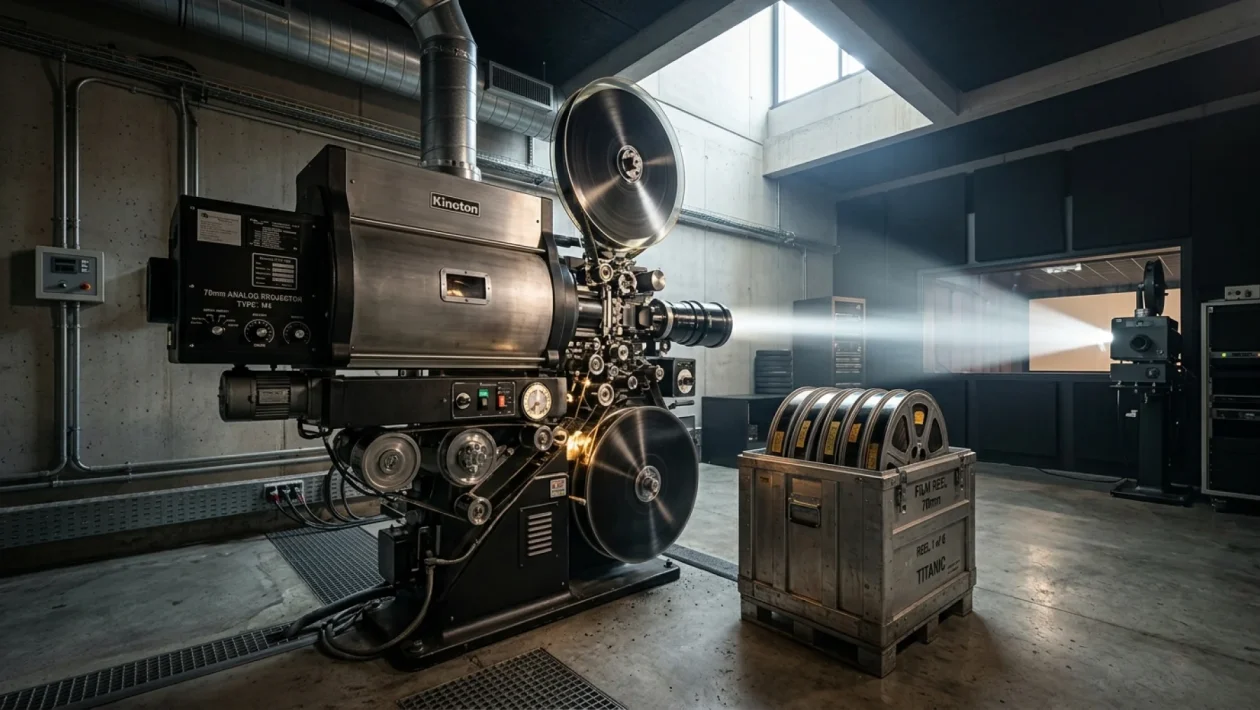
If you have tried scoring tickets to see The Odyssey this weekend, you already know the painful truth: securing a decent seat in a genuine 15/70mm screening requires a minor miracle. We are looking at sold-out shows weeks in advance, crashed ticketing servers, and desperate fans paying absolute top dollar on the resale market just to experience the film exactly how the director intended. The solution seems blindingly obvious to anyone standing in line—just build more screens. But as it turns out, slapping a massive analog projector into your local multiplex is a heavy-duty logistical nightmare of epic proportions.
Why IMAX 70mm Theaters Are Selling Out ‘The Odyssey’ Everywhere
It is July 2026, and the cinematic event of the summer isn’t just about what is happening on the screen, but exactly how it is being projected onto the wall. IMAX 70mm theaters offer a jaw-dropping 1.43:1 aspect ratio that standard digital projectors simply cannot replicate.
When you watch a sweeping space epic like The Odyssey on actual physical film stock, you are absorbing a staggering 18K equivalent resolution. The sheer scale of it creates an immersive depth that makes modern 4K digital setups look flat by comparison.
However, this visual supremacy comes with a massive physical footprint. A single 15/70mm print of this summer’s biggest blockbuster weighs roughly 600 pounds and consists of nearly 11 miles of celluloid. It is a heavy-duty, mechanical beast of an experience that demands absolute perfection from the equipment.
The CEO’s Dream of Building More Massive Screens
With massive lines wrapping around iconic venues like Toronto’s Scotiabank Theatre and premier Cineplex hubs nationwide, corporate brass is finally paying serious attention. IMAX CEO Richard Gelfond recently confirmed what we have all been screaming: he would “like to see more” of these authentic film venues operating globally.
The financial demand is entirely proven at this point. Audiences are routinely driving three hours, crossing provincial lines, and bypassing dozens of regular cinemas just to sit in a true 70mm auditorium.
“We are witnessing a massive renaissance for physical film projection. The audience appetite for the 15/70mm format is undeniable, and while I’d love to drop a film projector into every major market tomorrow, the physical limitations are exceptionally steep.”
He wants the expansion, the hardcore fans demand the expansion, but the massive gap between corporate desire and pouring the actual wet cement is where things stall out.
The Brutally Complex Reality of Retrofitting Cinemas
So, why can’t a massive cinema chain just mandate a physical 70mm projector in every major city? Because retrofitting an existing digital multiplex to handle a spinning mechanical giant is basically like dropping a commercial jet engine into a daily commuter car.
It requires intense structural engineering, specialized cooling systems, and highly trained personnel that barely exist in the modern workforce anymore. Let’s look at the sheer reality of what upgrading an auditorium actually involves:
- Reinforcing the projection booth floor: The combined weight of the massive platter system and the projector requires industrial-grade structural support to prevent total structural failure.
- Overhauling the HVAC system: 70mm Xenon bulbs burn incredibly hot and demand massive, dedicated exhaust vents to prevent melting the highly flammable film stock.
- Sourcing the vintage equipment: New 15/70mm mechanical projectors are not rolling off a modern assembly line; they are incredibly rare, meticulously rebuilt artifacts.
- Hiring a master projectionist: You cannot just press ‘play’ on an iPad and walk away. Threading, running, and maintaining these massive physical prints requires a highly specialized, specialized technician.
It is a masterclass in heavy-duty logistics that most modern cinema managers simply do not have the budget or the time to handle.
Breaking Down the Installation Gap
When you compare standard modern setups to the granddaddy of physical film, the barrier to entry becomes painfully obvious. IMAX 70mm theaters are investments in pure art, not just fast profit.
Here is a quick look at why local theatre chains hesitate to pull the trigger on a physical film expansion:
| Commercial Digital Setup | True 15/70mm Setup |
|---|---|
| Automated operation (No projectionist needed) | Requires highly trained mechanical projectionist |
| Standard booth ventilation | Requires heavy-duty, dedicated heat exhaust |
| Hard drive delivery (Zero physical weight) | 600+ lbs of physical film requiring a forklift |
| Fast, scalable installation | Requires rare parts and custom engineering |
Frequently Asked Questions
Is “The Odyssey” only available in physical 70mm?
No, you can easily catch it in standard digital formats and Dual Laser IMAX across the continent. However, purists rightfully argue the 15/70mm cut offers up to 40% more image on the top and bottom of the frame.
Will manufacturers start building brand new 70mm projectors?
There are industry rumors of modern hybrid projectors currently in R&D. But as of now, fully mechanical 15/70mm units are incredibly cost-prohibitive to mass-produce from scratch.
How can I find a real 15/70mm venue near me?
Always check the official theater website and specifically filter your search for “70mm Film.” If the ticketing listing just says standard “IMAX” without specifying the film gauge, you are almost certainly buying a ticket for a digital projection.
💡 Navigating the wild ticket market for this summer’s hottest release can be incredibly frustrating, but the sheer analog spectacle of physical film is entirely worth the headache.
🤝 Good luck out there on the ticketing battlefield, and remember to double-check your local venue’s actual projection specs before you hand over your credit card.
👇 If you managed to secure a coveted seat this weekend, share your thoughts below on whether the massive visual hype actually lived up to the reality!