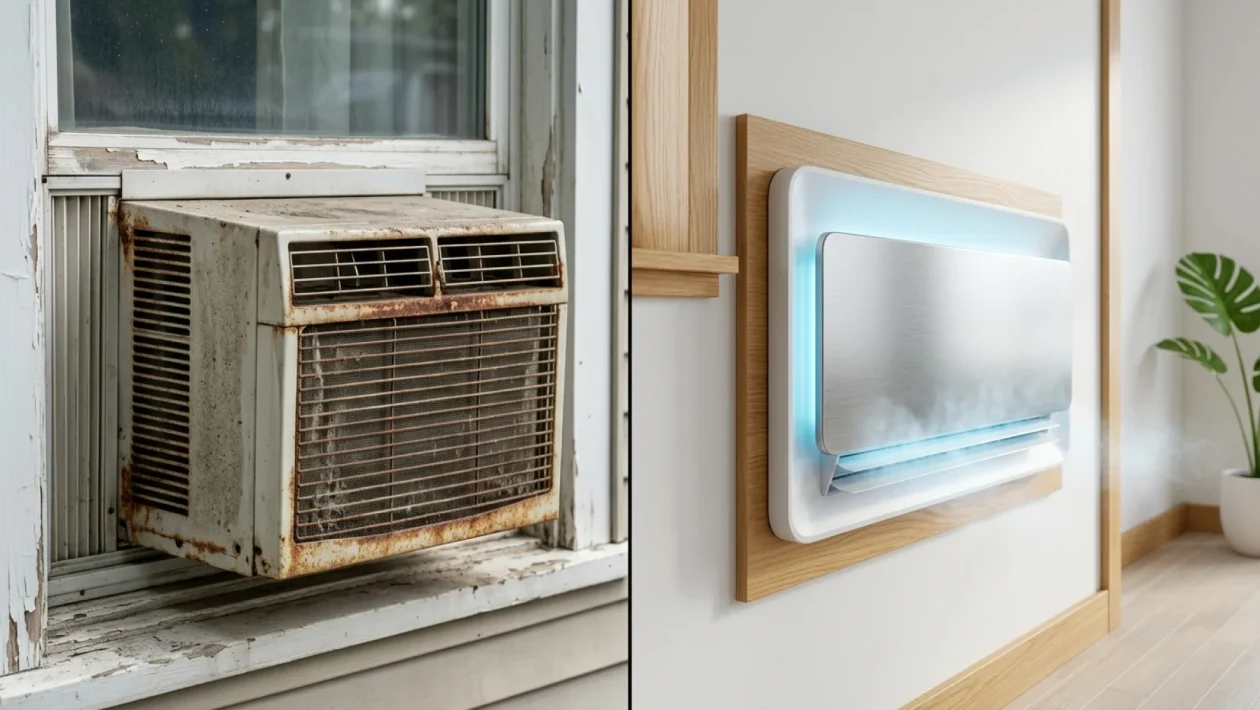
Your air conditioner is a ticking time bomb for your hydro bill and the environment. We are currently blasting our A/C units at maximum capacity just to survive the blistering heat of July 2026, but the way we chill our homes is fundamentally broken. Traditional air conditioning relies on toxic, liquid chemicals that are incredibly hard on the electrical grid and devastating if they leak. The good news? A revolutionary engineering leap is about to make your noisy, power-hungry backyard compressor entirely obsolete.
I’m talking about a massive shift away from chemical refrigerants entirely. A new wave of cooling technology is tearing up the blueprints of traditional HVAC systems and replacing them with smart, solid materials. We are finally entering an era where keeping your house ice-cold won’t mean destroying the environment or draining your wallet.
Solid-State Cooling
For the last century, we’ve relied on a constant cycle of compressing and expanding liquid refrigerants to pull heat out of our homes. The problem is that these fluorinated gases (F-gases) have a global warming impact thousands of times worse than carbon dioxide. The European Union has already started banning them entirely, and the North American market is feeling the squeeze.
Solid-state cooling completely ditches the liquid chemicals. Instead, these experimental systems use solid materials that physically change temperature when exposed to magnetic fields, electrical currents, or mechanical stress. It sounds like science fiction, but it is already happening in our own backyard.
In fact, a startup called Mimic Systems is actively testing a semiconductor-based heat pump right now in a Vancouver apartment building. Rather than cycling toxic liquids, it simply uses electrical currents to move heat efficiently from one space to another. It is a brilliant, entirely mechanical approach to climate control.
How Refrigerant-Free A/C Systems Work
If you’re anything like me, you probably want to know what is actually happening under the hood. While there are a few variations being tested—including systems that use magnets or pressure-sensitive plastics—the most promising is called elastocaloric cooling. It sounds complicated, but the physics are beautifully simple.
- The Stretch: The system takes a bundle of specialized metal wires (usually a nickel-titanium alloy) and physically stretches them using a small motor.
- The Heat Exchange: Stretching the metal forces it to heat up, at which point the system blows that excess heat outside your house.
- The Snap Back: When the tension is released, the metal snaps back to its original shape and rapidly drops in temperature, allowing a fan to blow that newly created ice-cold air directly into your living room.
It is essentially the same concept as stretching a rubber band against your lip, but engineered to cool an entire house. Researchers at Saarland University are spearheading this exact tech, and the results are mind-blowing.
“This could lead to disruption, even a paradigm shift, because the technology is so different from established cooling systems.”
Slash Energy Bills
Let’s talk numbers, because keeping your house at 20 degrees Celsius shouldn’t require taking out a second mortgage. Traditional A/C units use incredibly power-hungry compressors to force liquid refrigerants into a gas state. This brute-force method is why global electricity demand for cooling is expected to triple by 2050.
Solid-state systems bypass this energy-draining process entirely. By using highly efficient mechanical and electrical processes, these new units require significantly less power to achieve the exact same temperature drop. You get a quieter machine, zero risk of chemical leaks, and a noticeably lighter utility bill at the end of the month.
| Feature | Traditional A/C | Solid-State A/C |
|---|---|---|
| Cooling Mechanism | Chemical F-gases | Magnets, Metals, or Currents |
| Energy Efficiency | Low (High power draw) | High (Efficient mechanical shift) |
| Environmental Risk | High (Toxic leaks) | Zero (No refrigerants) |
Save Summer
Cooling is no longer just a luxury; it is a critical survival tool. As we navigate through another brutal summer, reliable air conditioning is literally saving lives. In 2019 alone, access to A/C prevented nearly 200,000 premature deaths globally among folks over the age of 65.
However, running millions of standard A/C units simultaneously puts crippling strain on our power grids. If we want to continue safely enjoying our summers without rolling blackouts or devastating environmental impacts, solid-state cooling isn’t just a neat gadget. It is a strict necessity.
Frequently Asked Questions
Are solid-state air conditioners available at the hardware store right now?
Not quite yet. While startups are running successful real-world trials in places like Vancouver and Germany, the technology is still in the prototype phase. However, with heavy investments pouring in, you can expect to see commercial units hitting the market within the next few years.
Will these new systems fit into my existing ductwork?
Yes. The beauty of solid-state cooling is that it only changes the mechanics inside the outdoor unit. The chilled air it produces can still be pushed through your home’s standard forced-air duct system just like a traditional furnace or A/C.
Why is the government banning traditional refrigerants?
Current refrigerants (F-gases) are incredibly potent greenhouse gases. If your old A/C unit springs a leak, the chemicals released do thousands of times more damage to the atmosphere than standard carbon emissions. Phasing them out is a critical step in modernizing global infrastructure.
🤝 Thank you for taking the time to geek out over home HVAC tech with me today. It is incredibly exciting to see how smart engineering is finally fixing one of the most outdated appliances in our homes.
💡 The next time you walk past your noisy, vibrating outdoor A/C unit, just remember that its days are officially numbered. Better, cleaner, and cheaper cooling is just around the corner.
📱 I’d love to hear what you think about this upcoming tech. Would you be the first on your block to install a solid-state unit?
👇 Please share your thoughts in the comments below, and good luck staying cool out there this summer!