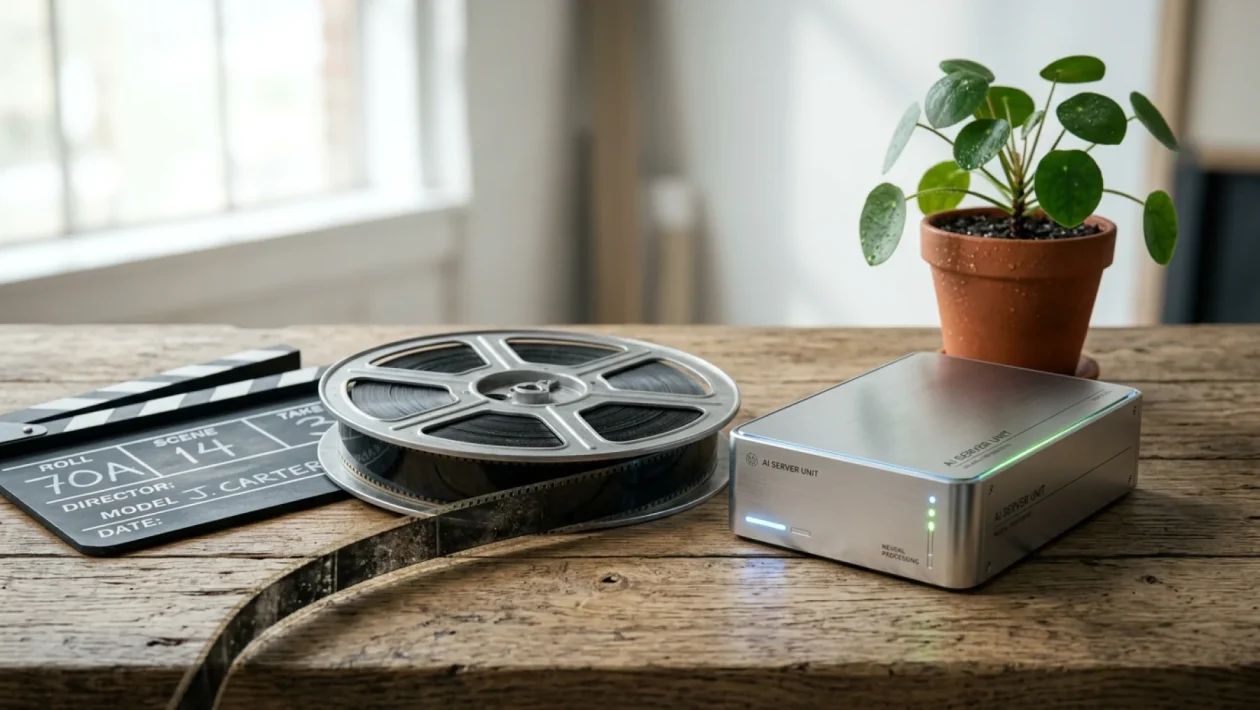
Hollywood is under attack by a room full of glowing server racks. We are staring down the barrel of a bizarre summer box-office showdown where Christopher Nolan’s upcoming 70mm epic, The Odyssey, is going head-to-head with a purely computer-generated competitor. A tech company called Fountain 0 is releasing Odysseus: The Fall, a two-hour feature generated entirely by artificial intelligence. They want you to believe a hard drive can replicate human suffering, triumph, and soul.
Look, I love cutting-edge tech just as much as the next guy. Give me a laser-guided miter saw or a smart thermostat, and I am a happy camper. But when it comes to the movies, this sudden influx of generative cinema is a massive red flag. We are about to find out if AI Movies can actually replace the blood, sweat, and tears of real filmmaking, or if they are just an expensive digital parlor trick.
AI Movies
Fountain 0 proudly slaps the label of “leading AI movie studio” on their chest. They are using an incredibly powerful core video AI model known as Kling to generate every single frame of their Homeric epic. The pitch is that technology can finally democratize blockbuster filmmaking for the masses.
According to their top brass, you no longer need hundreds of millions of dollars to tell a massive story. You just need a prompt box and some serious computing power. But a quick peek behind the curtain reveals something incredibly self-serving.
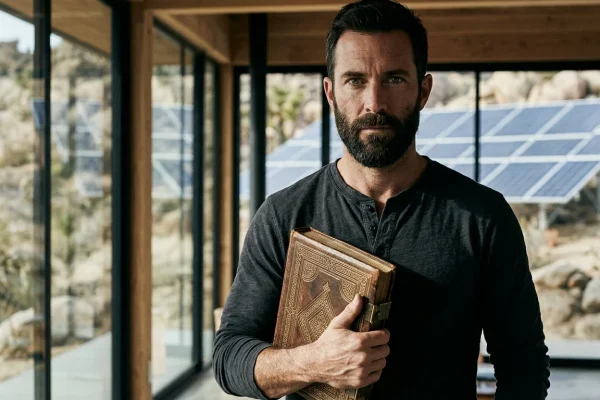
Instead of discovering raw new talent, the executives at Fountain 0 simply used their own likenesses for the lead roles. The writer, director, and co-founder, Ash Koosha, literally made himself the star, Odysseus. When a tech bro uses highly advanced software just to put his own face on a Greek hero, it feels less like a revolution and more like a billionaire’s vanity project.
Why The Digital Takeover
The tech industry insists this digital takeover is meant to hand creative power back to the people. But let’s look at how this supposedly “democratized” process actually plays out in the real world.
- A user feeds a massive language model a highly detailed prompt outlining a scene.
- The AI software scrapes millions of stolen, human-made images to understand lighting, composition, and anatomy.
- The system spits out a hyper-realistic, yet oddly sterile video clip that lacks any genuine emotional depth.
They argue this creates equal opportunity, but they conveniently ignore the massive, hidden tolls of the technology. The environmental cost alone is staggering. Here is a hard truth: training a single, massive AI video model can emit over 600,000 pounds of carbon dioxide, which is about the same footprint as driving five average gas-powered cars for their entire lifespans.
Worse yet, the environmental fallout from these massive data centers disproportionately impacts low-income communities. So much for leveling the playing field.
Crumbles Against
When you strip away the marketing hype, generative cinema simply falls apart under a microscope. Sure, the trailers might boast a few striking, hyper-realistic visuals. But watching an entire movie filled with uncanny-valley faces and stilted, robotic dialogue is downright exhausting.
| The Generative AI Clone | The Authentic Human Blockbuster |
|---|---|
| Sterile, perfectly calculated pixels | Raw, slightly imperfect cinematic beauty |
| Massive server farm carbon footprints | Tangible, practical sets and locations |
| Executives casting themselves as heroes | Talented actors pouring their souls out |
We saw this exact same issue last month when Fountain 0 premiered an AI-generated film at Tribeca about the very real, tragic protests in Iran. It took a deeply important story of human suffering and completely stripped it of its humanity. As a viewer, you are left with absolutely nothing of value.
“AI-generated movies, even when they do look good, are the visual equivalent of a pinch of cotton candy. You consume nothing of value and experience a poor imitation of pleasure.”
True Cinematic Grit
This is exactly why Christopher Nolan’s work will always stand the test of time. When I grab my popcorn and sit down in a massive Cineplex theatre, I want to feel the immense physical effort that went into the production. Nolan and his legendary cinematographer Hoyte Van Hoytema lugged those massive, proudly Canadian-invented IMAX cameras to practical locations to capture real light hitting real human faces.
There is a specific kind of magic in human limitation. A real actor making a spontaneous, unscripted choice on set will always carry more emotional weight than a perfectly rendered algorithmic output. We don’t just go to the movies to see pretty pictures; we go to connect with another human being’s vision.
Let the tech companies play with their digital cotton candy. I will take the grit, the dirt, and the honest mistakes of a real Hollywood crew any day of the week.
Frequently Asked Questions
Will AI entirely replace human actors?
Not anytime soon. While background extras and stunt doubles might face digital replacement in certain highly stylized action sequences, audiences still crave authentic emotional connections. A computer cannot replicate the subtle, unpredictable micro-expressions of a classically trained actor.
Why are AI movie models so controversial?
Beyond the lack of a human soul, the biggest issue is copyright theft. The algorithms powering these video generators were trained on millions of copyrighted images, paintings, and movies without giving a single dime of compensation to the original artists.
Is it actually cheaper to make an AI movie?
While it removes the need for catering, set building, and actor salaries, high-end AI generation requires immense computing power. Renting time on massive server farms is incredibly expensive, meaning true feature-length generative films are still largely out of reach for the average indie filmmaker.
🤝 Thank you for reading, and I hope this helped clear the smoke around this bizarre summer box office battle. 💡 Share your thoughts below, because I would love to know if you would actually pay hard-earned money to watch a computer act. 📱 Keep your eyes peeled for real, practical filmmaking in your local theaters this weekend. 👇 Stay sharp out there, and never settle for a digital knock-off when you can have the real thing!