Look, if you are waiting on parts to finish the back deck or wondering why fuel prices just jumped another ten cents overnight, stop glaring at your local hardware store. The real culprit is sitting halfway across the globe. A fresh Strait of Hormuz blockade shipping map update just dropped this July 2026, and it paints a chaotic picture for North American consumers.
Right now, we are looking at massive maritime detours, delayed container ships, and an inevitable ripple effect on everything from imported power tools to your morning coffee. By the time that cargo finally hits our shores, the cost of the detour is passed directly to you. Here is exactly what the live maritime radar is showing us today, and how you can actually prep your wallet for the fallout.
The Strait Of Hormuz: Why This Chokepoint Controls Your Wallet
If you aren’t a logistics nerd, you might be wondering why a narrow strip of water between Oman and Iran dictates the price of your weekend project. It comes down to pure, unadulterated volume. The Strait of Hormuz is the world’s most critical transit bottleneck.
Here is a sobering hard fact: roughly 20% of the world’s total global oil consumption passes through this 21-mile-wide channel every single day. When geopolitical tensions flare and ships drop anchor or turn around, the global supply chain goes into immediate cardiac arrest.
“When the Strait sneezes, the North American economy catches a violent cold. We are currently watching vessels forced into 14-day detours around the Cape of Good Hope, bleeding millions in unexpected fuel costs.” – Marcus Thorne, Senior Supply Chain Analyst based near the Port of Vancouver.
The Blockade Effect: Empty Shelves and Price Hikes
A physical or even threatened blockade changes the math for every major shipping conglomerate. Insurance premiums for vessels entering the Persian Gulf have skyrocketed over the last few weeks. Rather than risk a multi-million-dollar cargo ship, captains are slamming the brakes and changing course.
For the average guy up here in North America, this means the inventory at big-box retailers like Canadian Tire or Home Depot is going to thin out fast. Seasonal gear, specialized building materials, and electronics are taking the biggest hits. The longer a ship stays on the water, the more expensive its cargo becomes.
| Supply Chain Impact | Expected Consumer Fallout |
|---|---|
| Rerouted Crude Oil Carriers | Immediate price spikes at the local gas pump. |
| Delayed Container Ships | Backordered tools, electronics, and auto parts. |
| Surging Freight Insurance | Broad inflation on everyday imported retail goods. |
Decoding the Shipping Map Update: What the Radar Shows
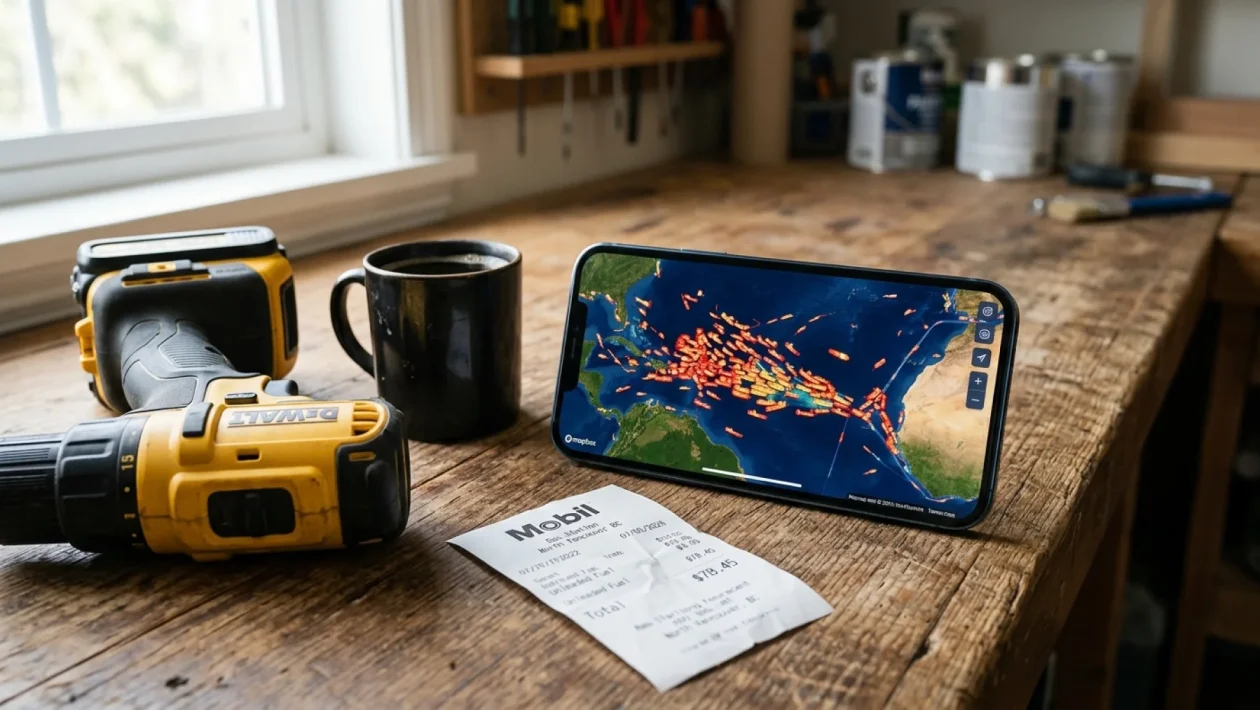
If you pull up a live maritime tracking grid right now, it looks like a highway traffic jam where everyone suddenly decided to take the scenic route. The shipping map update is fascinating, if a bit terrifying from an economic standpoint. Instead of a smooth line out of the Gulf, you see a massive cluster of red icons dead in the water.
Want to see the chaos for yourself? Tracking the logistics bottleneck isn’t just for industry insiders anymore. You can easily monitor these massive vessels right from your phone or laptop.
- Find a reputable open-source marine tracking website or app.
- Zoom in on the Middle East, specifically the narrow waters between the UAE and Iran.
- Filter the vessel type to “Cargo” and “Tankers” to clear out the local fishing boats.
- Look for the distinct “U-turn” patterns or heavy congestion outside the entrance of the strait.
It is the maritime equivalent of hitting a brick wall. Ships are either idling in safe zones, waiting for a naval escort, or biting the bullet and sailing entirely around the African continent to reach us.
Frequently Asked Questions About the Logistics Snag
How long will my imported goods be delayed?
If a vessel is forced to reroute around the Cape of Good Hope, you are looking at an additional 10 to 14 days of transit time. Factor in the resulting backlog at our domestic ports, and you should reliably add at least three weeks to any expected delivery dates for overseas orders.
Will this directly spike gas and diesel prices locally?
Absolutely. Because the Strait of Hormuz is a primary global artery for crude oil, any disruption instantly panics the commodities market. Expect to see pump prices remain highly volatile throughout the rest of the summer.
🤝 Share your thoughts with the guys on your crew or your neighbors—because everyone is going to be feeling the pinch at the hardware store soon. Being ahead of the curve means you can buy those materials now before the updated freight costs hit the shelves.
💡 Navigating these massive global shifts can feel overwhelming, but understanding the root cause is half the battle. When you know exactly why prices are moving, you stop getting blindsided by the receipt.
📱 Keep a close eye on the news, top off your gas tank when prices dip, and maybe put those overseas project orders in a little earlier than usual. Good luck out there, and stay sharp!